Coffee has played an important role in Rwanda's economy since the 1930s, when coffee was first introduced during the Belgian colonial period. Like many coffee-producing countries, Rwanda has faced its share of challenges. A collapse in global coffee prices during the 1990s, followed by the devastating genocide against the Tutsi in 1994, left much of the country's coffee infrastructure in ruins and the industry struggling to recover. Since then, Rwanda's coffee sector has undergone an incredible transformation. Government reforms have helped improve market access, while investment in quality, infrastructure, and farmer support has positioned Rwanda as one of Africa's most exciting specialty coffee origins. Organisations such as TechnoServe have also played an important role in improving traceability and quality management throughout the supply chain, helping Rwandan coffees earn their reputation on the global specialty coffee stage.
What Are The Key Coffee Growing Regions We Source From?
Today, around 500,000 smallholder farmers grow coffee across the country, with the average farmer tending approximately 170 coffee trees alongside food crops such as maize and bananas. Coffee is typically grown between 1,200 and 2,100 metres above sea level, although the producers we work with farm at elevations of 1,700 metres and above, where the conditions are ideal for producing exceptional quality coffee.
Western Province – Nyamasheke District
Much of our Rwandan coffee comes from Nyamasheke District in the country's Western Province, where farms sit between 1,600 and 2,100 metres above sea level. The region borders Lake Kivu and benefits from volcanic soils, high elevations, cool temperatures and reliable rainfall. These conditions encourage slow cherry maturation, allowing sugars and acidity to develop gradually and producing coffees with exceptional sweetness, clarity and complexity.
Southern Province – Nyanza District
We also source coffee from Nyanza District in Rwanda's Southern Province, where farms range from 1,600 to 2,000 metres above sea level. The region's rolling hills, fertile soils and moderate climate provide excellent growing conditions for high-quality Arabica. Compared to the Western Province, coffees from Nyanza often offer a different flavour profile, giving us greater diversity within our Rwandan offering.
The Rwandan Specialty Coffee Supply Chain Explained
Most coffee in Rwanda is grown by smallholder farmers on family-run farms, with the average farm covering around one hectare. After harvest, farmers deliver freshly picked cherries to a nearby washing station for processing.
Rwanda has around 300 washing stations, the majority producing fully washed coffees (however, we also do source naturals and special preps). These stations process and dry the coffee before the parchment is sent for grading, dry milling, and export. Coffee processed at home is generally sold locally as commercial-grade coffee.
We work directly with privately owned washing stations that source cherries from regional smallholder farmers. Because farmers can choose where they sell their harvest, washing stations compete for high-quality cherry by offering competitive prices and investing in long-term relationships with their local communities. Many of the producers and washing station managers we partner with have deep roots in these communities, helping to build trust and encourage farmer loyalty.
Depending on the producer's setup, the finished parchment is either exported directly or milled and prepared for export through a third-party exporter, such as Rwanda Trading Company (RTC).
What Kind of Coffees Do We Source From Rwanda?
At Nordic Aproach, we source a range of fully washed and natural coffees, with naturals carefully dried on raised African beds under either shade or full sun, depending on the desired drying profile. We also work with our producing partners to create special processing methods and custom preparations upon request.
Common Cultivars
The majority of our coffees are Red Bourbon, including smaller volumes of the selection RAB C15, Geisha, SL-28 and Mibirizi.
Typical Flavour Notes
Coffees from the Western Province of Rwanda are known for their elegant florals, citrus, and dried fruit. From the Southern Province, typical flavour profiles are structured, with notes of plum, cocoa powdered, and black tea.
When is the Coffee Harvest Period in Rwanda?
Insert visual mapping of shipment timelines
Harvest: March to August
Shipment Period: July to November
The Rwandan coffee harvest typically runs from March through August, covering cherry picking, processing, and export preparation.
From May onwards, we begin evaluating offer samples, allowing us to make our selections and move forward with pre-shipment sample (PSS) approvals.
Around May or June, our team travels to Rwanda to cup coffees alongside our partners at origin. These trips are an important part of our sourcing process, combining quality evaluation with relationship building and exploring new opportunities—whether that's developing new products, experimenting with processing methods, or sourcing from new regions.
Once pre-shipment samples are approved, the coffees are prepared for export. Shipments from Rwanda typically arrive at our EU warehouse between August and November.
How is Rwandan Coffee Harvested & Processed?
Planting & Production
Coffee farming in Rwanda is almost entirely made up of small, family-run farms. Families care for their own coffee trees throughout the year while also growing food crops for household consumption. Although some producers manage larger farms, most operate on a very small scale.
Picking & Selection
Harvesting is carried out by hand, with farmers selectively picking only ripe cherries. At our partner washing stations, every delivery goes through a rigorous quality control process. Farmers sort cherries before delivery, while station staff carry out additional hand sorting where needed. Cherries are also floated in water before processing to remove lower-density or defective fruit.
Processing
Rwanda's cool climate provides ideal conditions for carefully controlled fermentation.
For washed coffees, cherries are processed using a Penagos Eco Pulper, which removes the skin and around 70% of the fruit mucilage. The coffee is then dry fermented for around 10–12 hours before being washed and graded through water channels according to density. Finally, the parchment is soaked in clean water for approximately 16 hours before drying begins.
Fresh parchment is first transferred to shaded pre-drying tables, where extensive hand sorting takes place while defects are still easy to identify.
For natural coffees, cherries are hand sorted and floated before being spread in thin layers on raised drying beds. Drying typically takes three to four weeks, depending on weather conditions, before the coffee is stored and transported to Kigali for dry milling.
Drying
Whether producing washed or natural coffees, careful drying is essential.
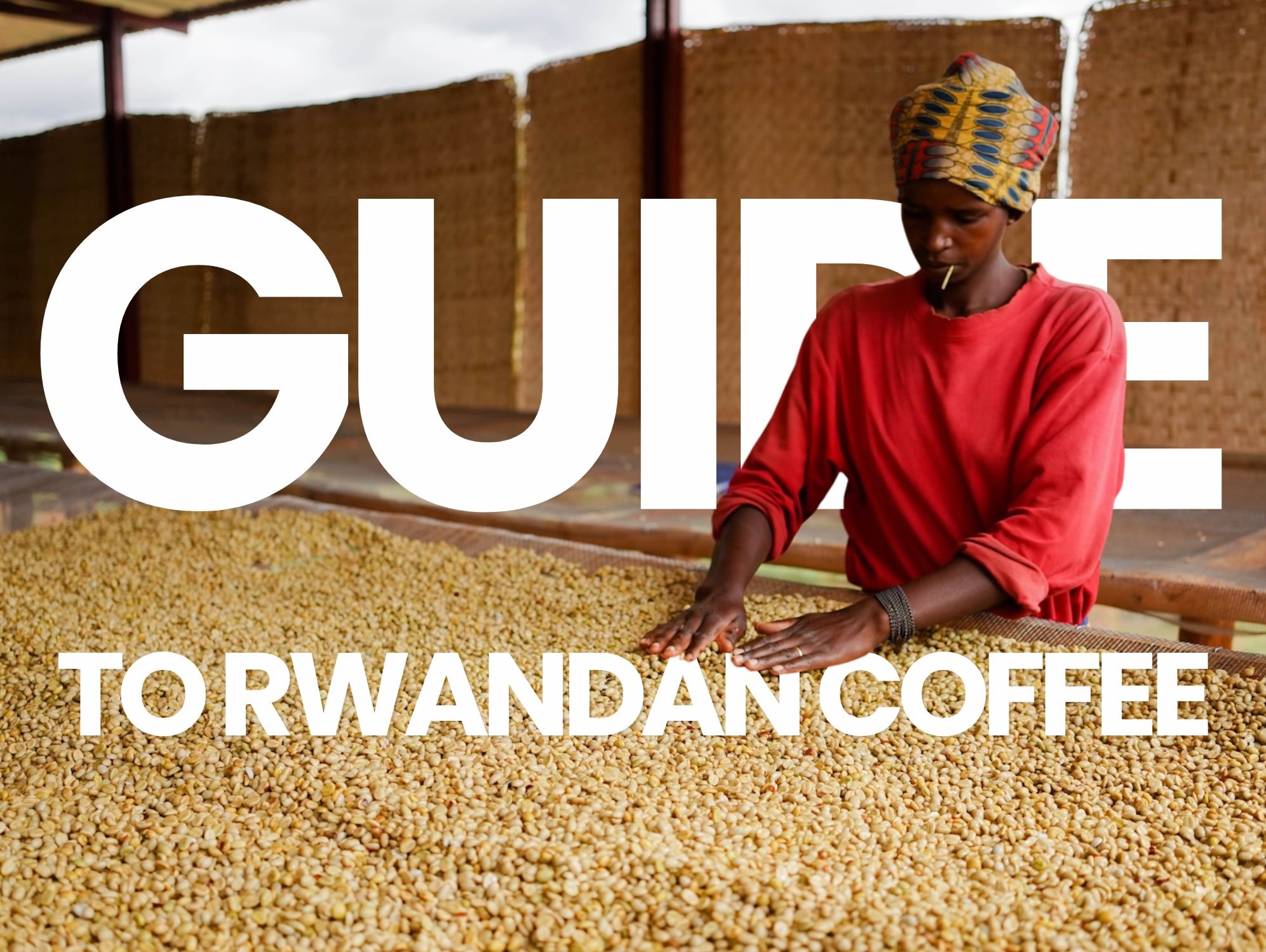
Coffee is dried on traditional African raised beds, allowing consistent airflow around the cherries or parchment. Cherries are spread in thin, even layers and turned regularly throughout the drying process to ensure even moisture loss.
Shade nets are used during the hottest parts of the day, overnight and during rainfall to protect the coffee from excessive heat and moisture. Throughout drying, dedicated teams continue hand sorting to remove any defective cherries or parchment, ensuring only the highest quality coffee moves forward.
Our Specialty Coffee Sourcing Approach in Rwanda
We've been sourcing coffee from Rwanda since 2012, from running washing stations, to building long-term relationships with producers who consistently share our focus on quality.
While Rwanda produces outstanding specialty coffee, the market is still heavily influenced by larger volumes of lower-priced commercial coffee. That can make it challenging to sell premium lots at prices that fairly reflect the investment made by farmers.
To help create a more sustainable market, we source a diverse range of coffees. Alongside exceptional washed lots, we also purchase naturals, special preps, unique varieties, and more accessible PB (Peaberry) coffees, while continuing to pay quality premiums to our producing partners and second payments.
Our two primary partnerships are with privately owned washing stations that also manage their own coffee farms (Gitesi Coffee and Mahembe Coffee). Through these relationships, we purchase both community lots produced by surrounding smallholder farmers and carefully separated single-farmer microlots grown on the stations' own farms.
Working closely with our partners also allows us to experiment with processing techniques, create hill-specific separations and develop coffees centred around particular cultivars such as Red Bourbon.
Alongside these partnerships, we also source coffee through Rwanda Trading Company (RTC), from one site in the Southern Province. These coffees bring additional diversity to our offering through distinctive flavour profiles and subtle differences in processing.
How Do Our Partners Incentivise Quality?
Quality starts with rewarding the people who produce it. Both of our main suppliers (Gitesi and Mahembe) pay premium prices for carefully selected, fully ripe cherries, encouraging farmers to focus on quality rather than volume. Farmers are expected to carefully sort their cherries before delivery. Any lower-quality fruit is removed before processing begins.
Beyond sourcing high-quality cherries, our partners place a strong emphasis on consistent, well-controlled processing. They follow strict protocols for both their classic washed and natural coffees, while taking the same careful approach when developing experimental processing methods. Alongside this, we continue to focus on differentiated lots, including hilltop separations, microlots, and unique varieties, to showcase the diversity of Rwanda's coffee.
Education is equally important. Our partners run ongoing training programmes covering everything from farm management and pruning techniques to financial literacy and long-term farm planning. At Mahembe, farmers also benefit from RTC's agricultural extension programme, while Gitesi offers its own comprehensive farmer support initiatives.
Both partners actively invest in their local communities by supporting schools with educational supplies, providing school uniforms, and funding community projects such as football facilities for local children.
These long-term investments strengthen farming communities, build lasting partnerships with farmers, and reward the commitment required to consistently produce exceptional coffee.
Logistics: How to Secure Your Rwandan Coffee
Buying "Spot"
These are coffees already in our Belgium warehouse, cleared and ready to ship.
Our shipments usually arrive at our warehouse between August and November.
How it works: This is the most straightforward option. You can buy as little as a single bag, and we’ve already handled the sourcing, milling, and import logistics.