Ethiopia

Ethiopia represents our largest origin by volume, with a portfolio highlighting Grade 1 Washed, Natural, and Special Prep Coffee lots.
We have been sourcing from Ethiopia since 2012. In order to access the best coffee with the highest exportable quality, we have established a local team on the ground. Our representative office is located in Addis Ababa, heavily involved in all stages of the product cycle. We generally work in the Southern Nations, Nationalities, and Peoples’ Region, as well as Agaro in the West. Our selection includes fruity, juicy, floral, and elegant flavour profiles.
Harvesting season
October - January
Arrival times
April – July
Quantities
50 – 100 bag lots
Packaging
30 or 60 kg grain per bag
Cultivars
Heirloom, improved varietals from research center
Processes
Fully washed and natural coffee, dried on raised beds
Flavour profiles
Fruit juice, fruit tea, floral, elegant
Usage
Widely used for filters, as single origin espresso and in espresso blends.
Shelf life
Normally holds up well for a year. We can never guarantee more than 6 months after arrival for any coffees.
With the geographical diversity and sheer size of Ethiopia’s coffee regions, we look for distinctive, exceptionally clean and atypical lots that represent the terroir to its fullest. To ensure consistent quality, we stay actively involved at every stage of the value chain, from farm to export, as a specialty coffee importer working at origin.
We are a specialty coffee importer of washed Grade 1 coffees, naturals, and experimental preps. We source more than 20 containers annually from the South and West of Ethiopia. The Southern regions we source from are Guji, West Arsi, Kochere, Yirgacheffe, and Sidama, as well as Limu and Agaro from the West.
Our shipments usually arrive at our warehouse between April and July. Our pre-contracting protocols are determined by price fluctuations and estimated local supply and demand patterns. Larger volumes of 100+ bags are sourced from private or cooperative washing stations, whereas small or medium volumes usually come from single producers, small producer groups, and estates. While we try to return to the same producers, cooperatives, and washing stations, having a team on the ground allows us to also develop new relationships and projects with a diverse range of suppliers.
Ethiopia’s coffee sector has developed significantly over the past years. New, complex flavour profiles have been discovered in well-known areas that were traditionally grouped based on their region. We felt that the complexity in flavour was not represented well enough within the existing categorisation method. We therefore developed our own classification system: the Ethiopian Flavour Wheel. It is a useful tool when selecting Ethiopian coffees, as it gives you a clear idea of what to expect in the cup.

A step-by-step overview

Most coffees in Ethiopia are organic by default, as they derive from seedlings provided by the Jimma Agricultural Research Center. Organic compost is common, and pruning practices are less common. A farmer typically has less than 1500 trees per hectare, with 1 tree typically producing cherries equal to less than 100 – 200 grams of green coffee.
The varieties are collectively referred to as Ethiopian Heirloom, which is a myriad of local, native Typica hybrids and new improved varieties based on the old strains. Some are named with a code such as 74/112 and 74/110, developed in the 1970’s at the Jimma Agricultural Research Center (JARC) for resistance to the coffee berry disease. These two varieties begin with “74” to indicate their cataloguing and selection in 1974.
The coffee cherries are picked and sorted by smallholders. They are sold by the farmers at a cherry collection centre, or at the washing station directly - depending on their proximity to each location. Sometimes, the cherries are also sorted at the washing station.
The cherries are placed directly in the hopper that is connected to the pulping machine (a traditional Agaarde Disc Pulper). The coffee flows from the hopper down to the pulper, and the pulper removes the skin and pulp. The machine is designed to conduct grading of high and low quality (1st and 2nd). The coffee is then fermented under water in tanks for an average of 72 hours, but any time frame between 48 - 100 hours is within the norm. The coffee is graded again in channels, so that the cherries of lower quality (with a lower density) will float. They are removed, leaving the denser, higher quality green beans to be separated as higher-grade lots.
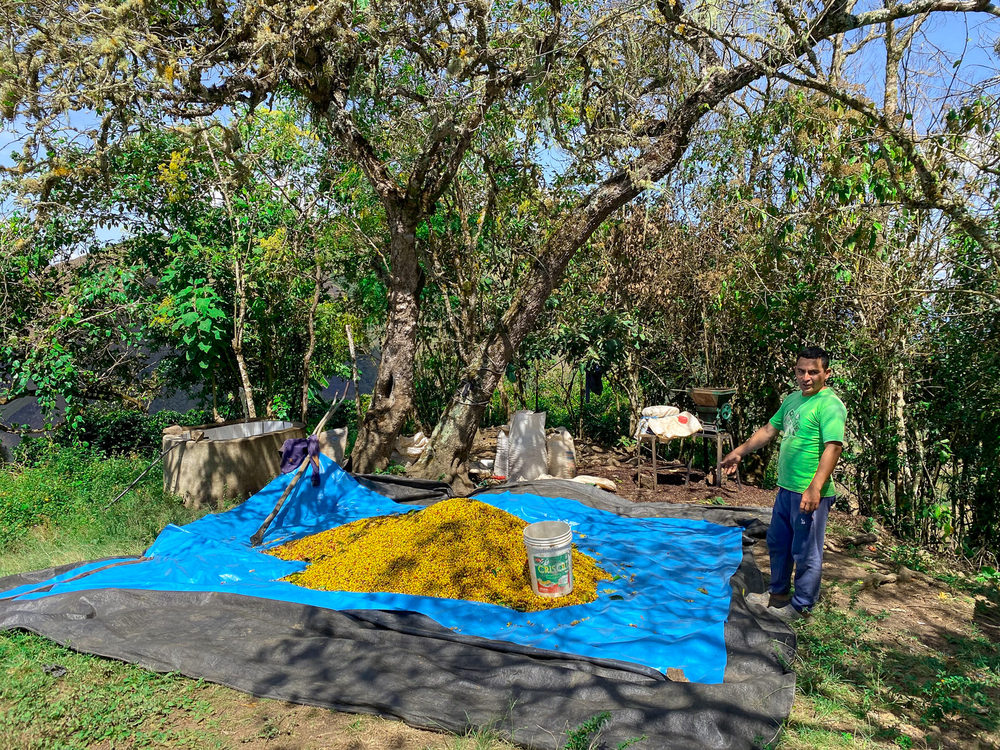
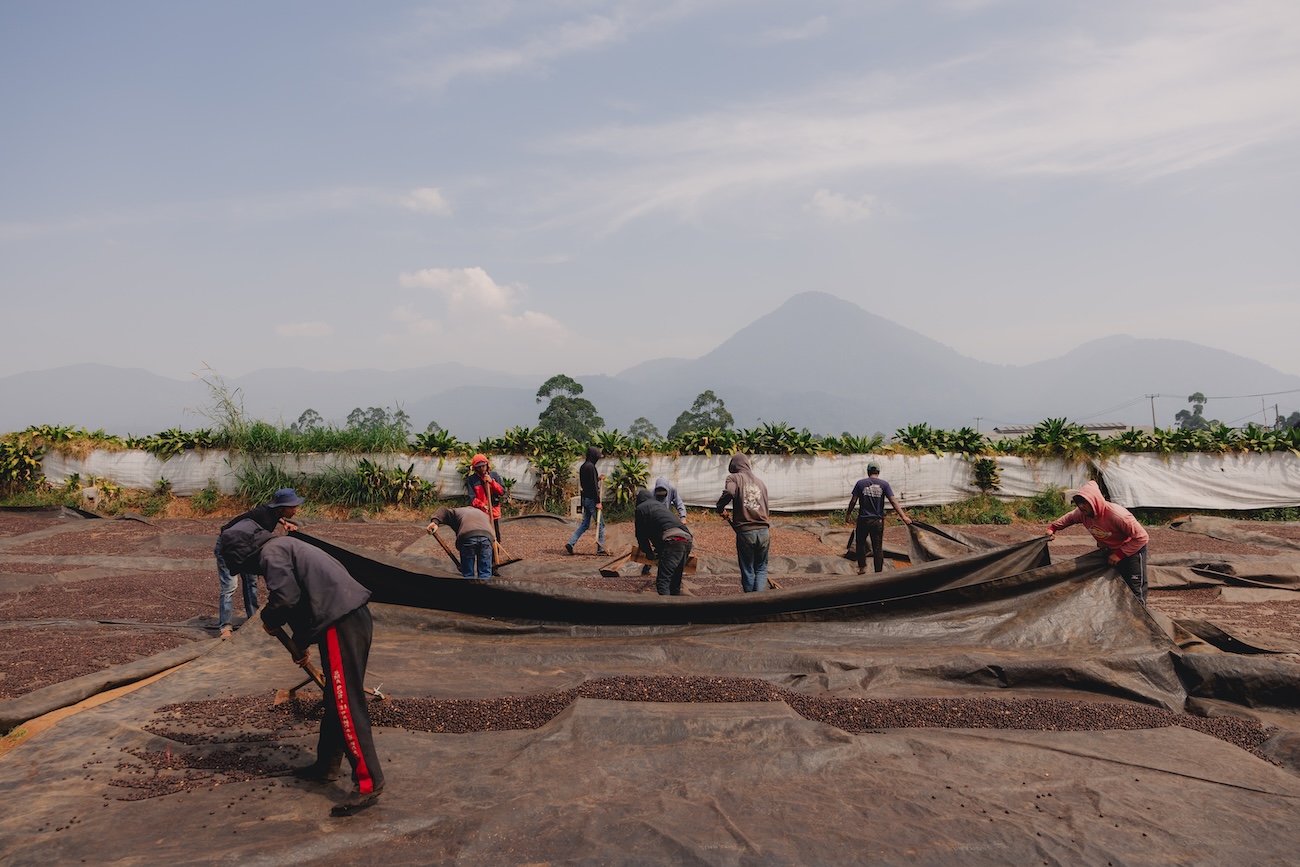
The parchment is soaked in clean water and then dried on raised beds for approximately 8 - 20 days. The coffee is dried in layers of 2-8 cm, depending on the climate, the type of tables, and the stage of drying.
Quality
Ethiopia operates within a complex, regulated coffee framework. Recognising the importance and challenges of maintaining coffee quality, we as a specialty coffee importer have made substantial investments in the region. Our dedicated team and office in Addis Ababa oversee the entire value chain, ensuring adherence to our three core pillars.
Our quality control measures include sharing data and protocols with producers, supporting improved processing methods, supervising cherry selection, and monitoring samples throughout the harvest, including type samples, offer samples, and pre-shipment samples. Continuous cupping at origin and at our HQ ensures consistency.
The Addis Ababa team also supervises milling, bagging, and shipping, maintaining full control over export preparations, port transfers, documentation, and personally sealing cargo before it leaves Ethiopia.
Transparency
We uphold strict protocols and standards in all partnerships, particularly when selecting export partners. Our on-ground team conducts firsthand visits to washing stations, gathers critical production data, and oversees every step of the coffee process. This hands-on approach guarantees a transparent flow of information for the coffees we source each season.
The Ethiopian government stabilizes the coffee market by setting a minimum export price. Within our value chain, key entities include Private Exporters, Representatives, Cooperatives, and Unions:
- Private Exporters purchase parchment, identify international buyers, and manage logistics.
- Representatives support medium-sized farmers with logistics and market access.
- Cooperatives are farmer-led organizations owning washing stations.
- Unions serve as the primary exporters.
Cherry prices fluctuate based on regional competition and demand, with farmers selling by weight in Ethiopian Birr. We report weighted regional averages for accuracy. Washing stations sell parchment in 17kg units, priced in Birr.
Impact
As an Ethiopian coffee importer, our operations reflect our commitment to quality, transparency, and fair compensation across the coffee supply chain. By investing in local infrastructure and expertise, we set new standards in the specialty coffee market.
Our Addis Ababa team supervises every stage, ensuring that the coffee you cup is exactly what arrives at your warehouse. Close collaboration with Private Exporters, Representatives, Cooperatives, and Unions prioritises fair pricing, traceability, and consistent quality. By adhering to rigorous protocols, we guarantee access to some of the highest-scoring Ethiopian coffees available on the cupping table.

About the origin
Ethiopian coffee farmers are typically smallholders with around 0.25 - 2 hectares of land. Cherries are usually sold and delivered to washing stations. These stations are either owned by or vertically integrated with an exporter. Parchment is delivered to an ECX checkpoint for grading. Once certified as exportable, parchment will then be cleaned and sorted, ready to be cupped by buyers
Ethiopia's coffee history
Linguists have determined that the earliest reference of coffee in Ethiopia is in Arabic documents dating back to the year 900. The documents refer to a strange new drink called “buna” that was being consumed throughout the country; “buna” is Oromiyan (a language spoken in Ethiopia) for coffee.
Arabica coffee has always grown wild in the hills of the Kaffa districts, with several coffee farms established in those areas. Today, 98% of the Ethiopian coffee farms are runned by smallholders. As coffee still grows wild in many areas, farmers harvest their crops utilising 4 different systems: forest coffee, semi-forest coffee, garden coffee, and plantation coffee.

Interested in this origin? Talk to your sales rep.