
What is coffee cupping?
Often referred to as coffee sensory analysis, coffee cupping is the industry's universal language for tasting coffee. By following a Coffee Cupping Protocol, producers, exporters, importers, and roasters can assess coffees in a consistent and comparable way. At Nordic Approach, cupping is central to how quality is determined, coffees are selected for the offer list, and consistency is tracked over time. It also plays a key role in providing structured feedback to producers and collaborating on improvements at origin.
Coffee cupping protocol: step-by-step guide
A proper cupping session follows a precise and repeatable process. Below is a detailed step-by-step guide:
1. Preparation: weighing and grinding
- Coffee is weighed according to a fixed ratio (commonly 8.25g per 150ml of water).
- Beans are ground to a medium-coarse grind (similar to coarse sand).
- Each sample is typically prepared in multiple cups to detect inconsistencies.
2. Dry aroma evaluation
- Before adding water, smell the dry grounds.
- This step reveals initial aromatic compounds and can hint at the coffee’s character (e.g., floral, nutty, spicy).
3. Brewing and steeping
- Hot water (around 93–96°C) is poured over the grounds.
- The coffee is left to steep undisturbed for 4 minutes, forming a crust on the surface.
4. The “break”
- Using a coffee cupping spoon, the crust is gently broken while leaning in to smell the wet aroma.
- This is one of the most important sensory moments in the process.
5. Skimming
- After breaking the crust, remaining grounds and foam are skimmed off the surface.
- This ensures a clean cup for tasting.
6. Tasting (slurping)
- Coffee is tasted using a coffee cupping spoon.
- A quick, forceful slurp aerates the liquid and spreads it evenly across the palate.
- This enhances perception of flavour, acidity, and mouthfeel.
7. Repeat evaluation
- As the coffee cools, it is tasted multiple times.
- Flavour clarity and balance often become more apparent at lower temperatures.
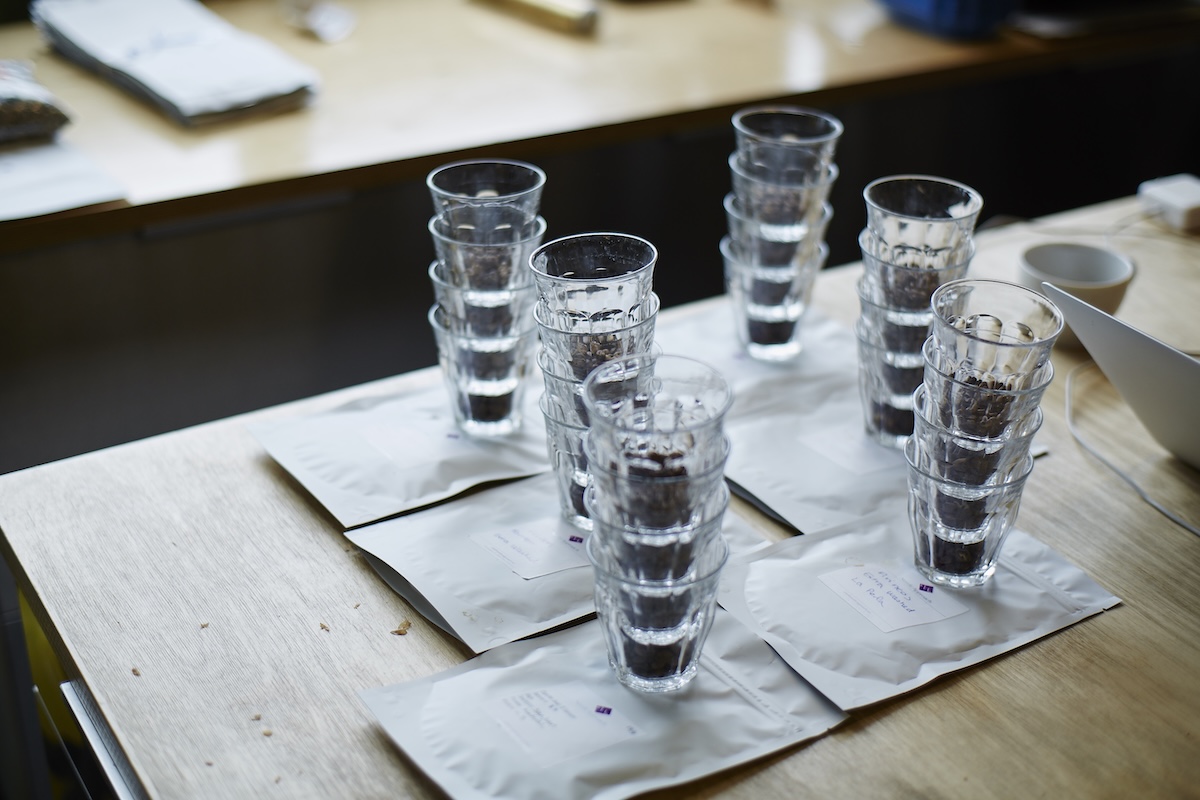
What we look for when cupping coffee
During cupping, our experts use specific coffee descriptors to evaluate coffee. These include:
- Aroma – Fragrance and scent (dry and wet)
- Flavour – Overall taste profile
- Acidity – Brightness or liveliness
- Sweetness – Natural sugars and balance
- Body – Texture and mouthfeel
- Aftertaste – Lingering flavours
- Balance – Harmony between all elements
Descriptors can be broad (fruity, floral, nutty) or highly specific (jasmine, blackberry, dark chocolate).
At Nordic Approach, cupping notes are provided with every one of our coffees to ensure transparency and help roasters communicate flavour potential clearly. We follow standard SCA scoring guidelines and have our own internal calibration processes to ensure consistency. Cupping sessions may be adapted depending on context, adding custom descriptors or simplifying evaluations when needed.
How Nordic Approach uses coffee cupping
Cupping is at the core of all our operations. Every coffee is cupped multiple times:
- At origin (type samples)
- Final selection (offer samples)
- Pre-shipment stage (pre-shipment samples)
- Upon arrival (arrival samples)
- Decisions are based on cup quality, not just data
Cupping is also used for:
- Team training
- Calibration across markets
- Transparent communication with partners
This ensures that every lot meets expectations before reaching roasters. Explore the different sampling stages throughout the product cycle where cupping plays a key role.
Why coffee cupping is so important to us
Coffee cupping is essential for:
- Making buying decisions
- Evaluating new lots
- Providing feedback to producers
- Ensuring consistency and quality control at different stages of the product cycle
It creates transparency across the supply chain, especially when coffees are assessed by multiple professionals at different stages.
At Nordic Approach, cupping is at the core of both the business and the brand. It plays a central role in decisions around coffee selection, how coffees are presented, and how expectations are managed. It is also essential for maintaining consistency and quality over time; across lots, sites, projects, within a single season, and year after year. In many cases, cupping also serves as the foundation for resolving quality-related discussions or disputes.
Cupping is always conducted with a clear purpose. This might include collecting notes for the offer list, evaluating coffees for quality control, approving shipments, or exploring potential new supply chains. While the setup remains consistent, the way notes are taken and discussions are carried out can vary depending on the objective.
“Through the shared language of cupping, structured feedback can be communicated and discussed among all stakeholders”, says Josh Coleman, one of our Green Coffee Buyers for multiple origins we source from.
“At Nordic Approach, cupping is a highly collaborative activity. We both give and receive feedback across different stages of the supply chain, though without direct interaction with the final consumer. Coffees are cupped blind to maintain objectivity, with identities revealed afterward to provide context. The process is always discussion-driven”, he adds.
We are also seeing more producers using cupping as a tool to validate decisions in production and to ensure their coffees are accurately represented further along the supply chain. In addition, there is a growing number of competitive Cup Tasting Champions emerging from producing countries. Overall, cupping continues to play a key role in driving innovation, particularly at the processing level.
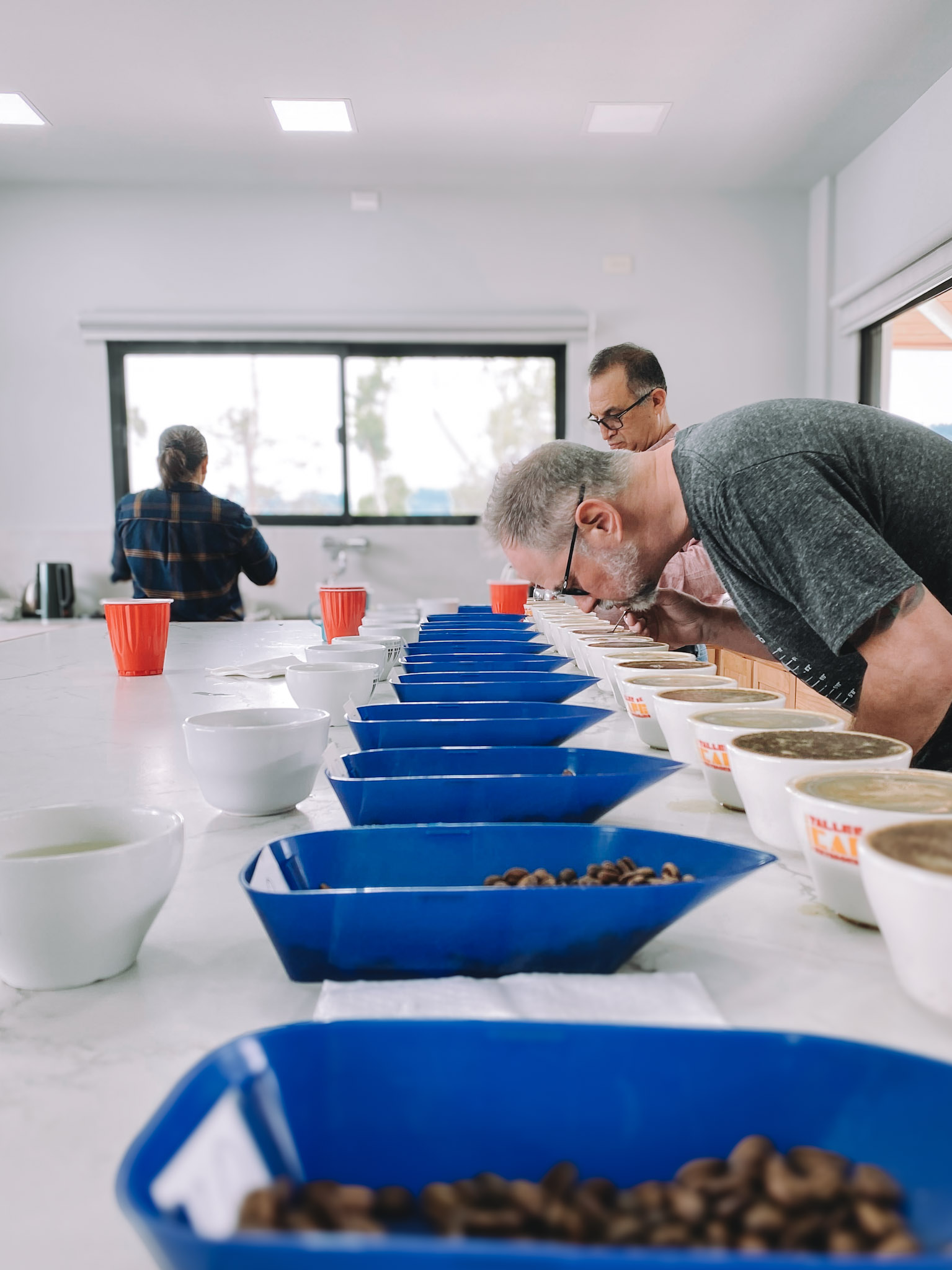
Specialty vs. commercial coffee cupping
Specialty Coffee
- Focus on flavour complexity and quality
- Often uses standardised scoring systems (e.g., SCA)
- Small differences can impact price and selection
Commercial Coffee
- Focus on cleanliness and defect detection
- Larger sample sizes are often cupped
- Evaluation ensures the coffee meets contract specifications
Both rely on structured cupping practices, but the goals differ.
FAQ: coffee cupping
How do we cup coffee in our lab?
We follow standardised coffee cupping protocols, evaluating aroma, flavour, aftertaste, acidity, body, balance, and overall quality. We follow standard SCA scoring guidelines and have our own internal calibration processes to ensure consistency.
Do you host coffee cupping events?
Yes. Nordic Approach hosts cupping events for roasters at our offices in Oslo or at other locations. We also participate in coffee events globally. Roasters are also welcome to join sessions at origin.
Why is cupping important in sampling?
Cupping ensures that each coffee lot matches its expected profile and meets quality standards before purchase, shipment, and release.
To wrap it up
Coffee cupping is more than just tasting. It’s a structured, shared methodology that underpins quality, transparency, and collaboration across the coffee industry. Whether you're a producer, buyer, or roaster, mastering cupping is essential to understanding and communicating coffee at the highest level.