About Kenyan Coffee: The Basics
About Kenyan Coffee: The Basics
Kenyan coffee is grown in East Africa, primarily around Mount Kenya in Central Kenya and west toward Mount Elgon near the Ugandan border. The country spans diverse altitudes and climates, creating ideal conditions for high-quality coffee production.
Kenyan coffee production ranges between 45,000 and 65,000 tons annually, with a strong focus on washed coffee processing. Over 700,000 smallholder farmers contribute around 55% of total output, while the rest comes from estates and cooperative-run wet mills.
Coffee plays a vital role in Kenya’s economy, accounting for roughly 10% of export income. The industry is highly structured, with a transparent auction system that rewards quality and consistency, key factors in the global reputation of Kenyan coffee beans.
What Are The Key Coffee Growing Regions We Source From?
We source Kenyan coffee primarily from Central Kenya, where altitude, volcanic soil, and rainfall create ideal growing conditions.
- Kirinyaga Known for high elevations and rich soils, producing coffees with bright acidity, berry notes, and pronounced sweetness.
- Embu Offers balanced profiles with citrus, stone fruit, and floral characteristics due to varied microclimates.
- Murang’a Produces vibrant, fruit-forward coffees with sparkling acidity and medium body.
- Kiambu Known for well-rounded coffees with wine-like fruit notes and refined finishes.
What Coffee Varieties Are Grown in Kenya?
Kenyan coffee is globally recognized for its clarity, structure, and vibrant acidity.
Common Cultivars:
- SL28
- SL34
- Batian
- Ruiru 11
- K7
Typical Flavour Notes:
- Blackcurrant
- Red berries
- Citrus
- Stone fruit
- Floral tones
Washed coffee from Kenya is known for its clean, structured cup profile, while natural-processed lots tend to be more intense and fruit-forward.
What Makes Kenyan Coffee Unique?
Kenyan coffee stands out due to its exceptional quality and fruit-forward, complex flavour profiles: the result of a straightforward supply chain, precise processing protocols, climatic conditions, and on-the-ground organisation. The auction model encourages competition among producers, driving quality improvements across the supply chain.
For specialty coffee importers, Kenya offers:
- Traceability down to factory level
- Consistent high-quality lots
- Transparent pricing systems
- Strong cooperative structures
This combination ensures both exceptional coffee and long-term sustainability for Kenyan coffee farmers.
The Kenyan Coffee Production System
Kenyan coffee production is divided into three main sectors:
- Smallholder cooperative societies (FCS) – Produce over 50% of the country’s coffee
- Small estates – Limited production, sometimes inconsistent quality
- Large estates – High yields but often less complex cup profiles
Smallholders deliver coffee cherries to cooperative-run factories (wet mills), where processing takes place. These factories are central to maintaining quality and consistency in Kenyan coffee production.
When is the Coffee Harvest Period in Kenya?
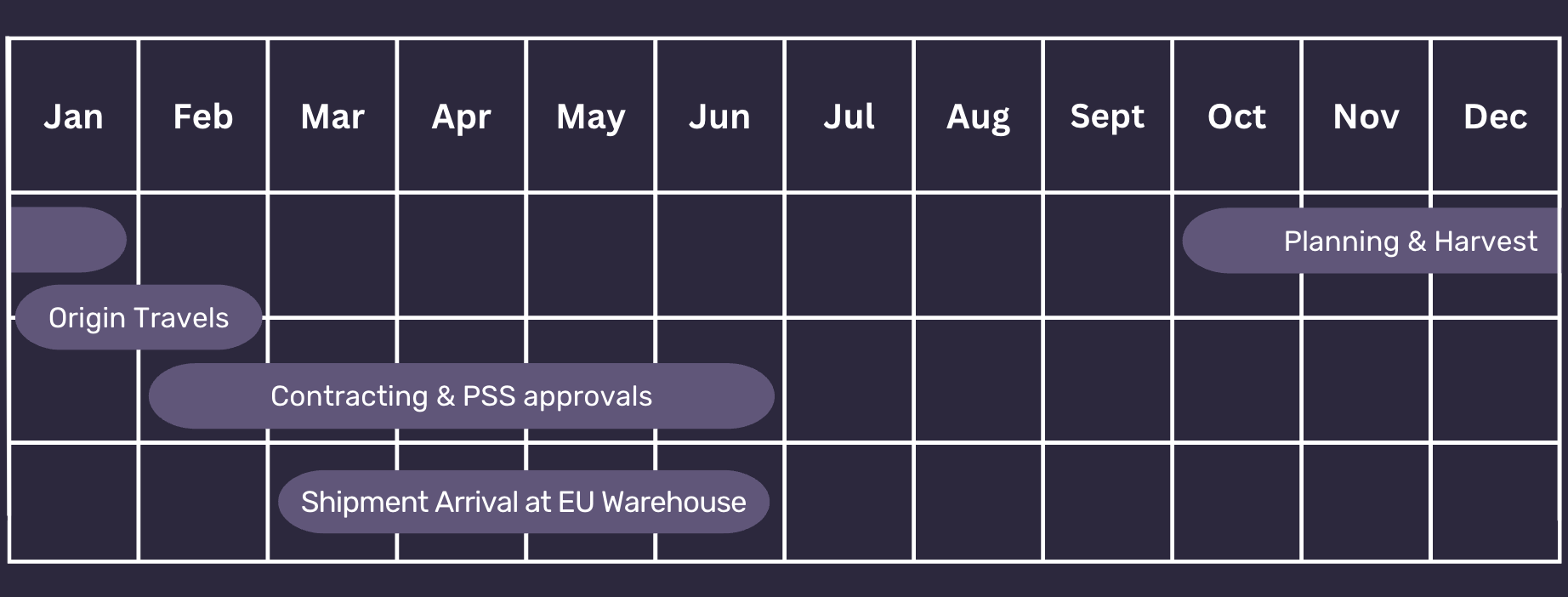
The Kenyan coffee harvest typically runs from October through January, covering the picking of coffee cherries, processing, and lot preparation.
We begin evaluating Kenyan offer samples from December into January, allowing us to make selections, and move forward with pre-shipment sample (PSS) approvals.
During this period, our team travels to origin, usually in January or February, for intensive cupping sessions with our partners at origin. This hands-on approach helps us secure the best Kenyan coffee beans directly at source.
Once pre-shipment samples are approved, shipments are prepared and exported. Kenyan coffee shipments generally arrive at our warehouse between March and June.
How is Kenyan Coffee Harvested & Processed?
1. Coffee Cherry Delivery
Farmers deliver freshly picked coffee cherries to factories. Cherries are sorted to remove defects before weighing and registration. Farmers receive an initial payment at delivery.
2. Washed Coffee Processing
Most Kenyan coffee is fully washed:
- Cherries are pulped to remove skin and pulp
- Beans are fermented for 18–24 hours
- Washed and graded by density
- Soaked in clean water for up to 24 hours
3. Drying
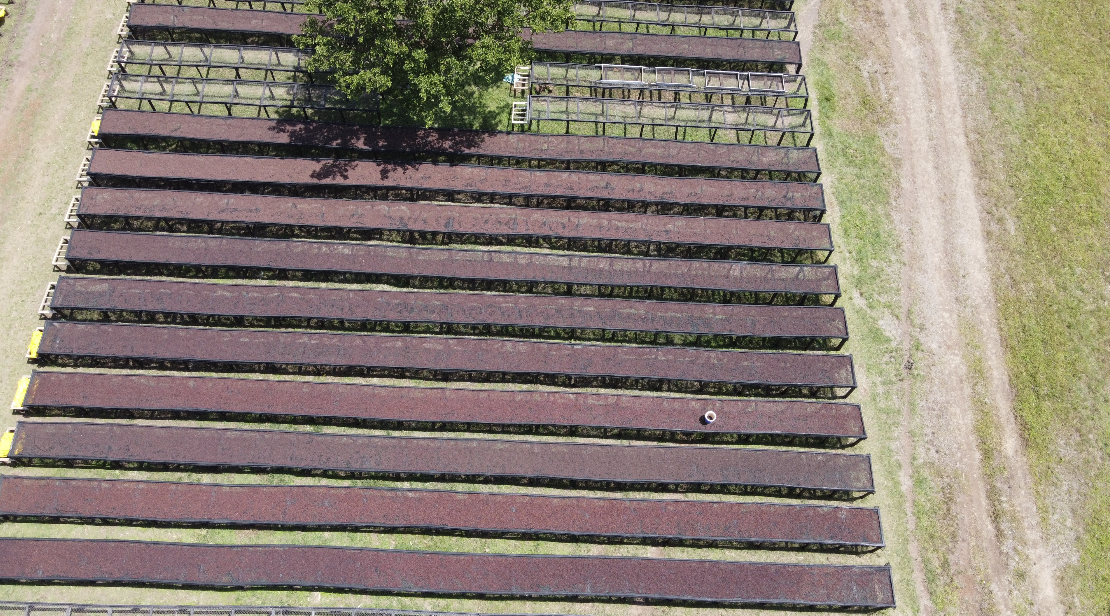
Beans are sun-dried on raised African beds:
- Drying takes 6–20 days
- Beans are regularly turned and sorted
- Target parchment moisture: 11–12% (prior to milling and export preparation)
4. Dry Milling, Grading, & Export Preparation
The dry parchment moves to a centralized dry mill, where the coffee is processed, screened, and graded, prior to the weekly auctions in Nairobi (where the coffee is then sold).
At the dry mill, the parchment layer is removed using hulling machines to reveal the green coffee beans. The coffee is then cleaned to remove dust, broken beans, husks, and other physical defects.
When Kenyan coffees are dry milled and prepared for export, they are also graded by size:
- AA (large beans, highest grade)
- AB
- PB (peaberry)
- Lower grades (C, TT, T)
Grading plays a key role in pricing and auction classification. At Nordic Approach, we source AA, AB, and PB grades.
Additional sorting is often done using density tables, colour sorters, and hand sorting to improve consistency and remove defects. Lots are then cupped and approved before export preparation.
Once approved, the coffee is bagged, commonly in GrainPro and jute bags, however we vacuum pack all of our Kenyan coffee. It is labelled for traceability and prepared for shipment through the export system and auction/direct sale channels.
Cooperative Structure in Kenya
Most Kenyan coffee farmers are members of Farmer Cooperative Societies (FCS). These organizations:
- Operate factories (washing stations)
- Manage financing and sales
- Distribute profits to farmers
Farmers choose where to deliver their coffee cherries, creating competition between factories and encouraging higher quality standards. Some cooperatives can manage multiple factories. Well-managed cooperatives can return up to 85–90% of the final sales price to farmers.
How is Kenyan Coffee Bought & Traded?
Kenyan coffee is primarily sold through a centralized auction system:
- Coffee is milled, graded, and catalogued
- Exporters sample and bid on lots
- Licensed brokers facilitate transactions
Recent regulatory changes (2023) require exporters to purchase coffee through auctions rather than direct negotiation.
Read more about the Kenyan specialty coffee market here.
Our Specialty Coffee Sourcing Strategy in Kenya
At Nordic Approach, our approach to specialty coffee import focuses on:
- Long-term relationships with cooperatives
- Consistent sourcing from trusted factories
- Extensive quality control and cupping at origin
Most coffees are sourced from smallholder farmers delivering to cooperative washing stations. These coffees are blended into daily lots, often representing hundreds of producers.
By working with reliable exporters and cooperatives, we ensure traceability, consistency, fair pricing, and high quality.
Transparency in Kenyan Coffee Trade
Kenya’s auction system is widely regarded as one of the most transparent in the coffee industry. Kenyan coffee is sold in clearly defined lots and grades, ensuring full traceability from the mill to export. Farmers can track how much of the final price returns to them, and in many cases, well-managed cooperatives return up to 90% of total sales revenue.
Only licensed buyers are permitted to participate in the auction, and detailed information—including lot numbers, grades (AA, AB, PB), sale prices, buyer or broker details, and the originating factory or cooperative—is publicly available. This level of openness ensures that Kenyan coffee beans purchased at auction remain fully traceable and that payments follow a clear, accountable process.
After each sale, cooperatives receive a full settlement breakdown outlining the auction price, along with deductions for processing, transport, marketing, brokerage, and taxes. This transparency allows farmers, through their cooperative records, to understand exactly what share of the final price they receive.
In addition, cooperatives are regulated by the Coffee Directorate under the Agriculture and Food Authority (AFA), requiring them to maintain transparent financial records, provide payment statements to members, and undergo annual audits and general meetings. These systems help ensure fair distribution of income and reinforce trust across the Kenyan coffee production chain.
Well-managed factories can return up to 90% of the sales price to farmers, while competition for coffee cherries between factories further drives quality, as higher prices are paid for better lots. Our sourcing focuses on these high-performing, specialty-driven cooperatives that prioritise quality, transparency, and long-term sustainability.
Logistics: How to Secure Your Kenyan Coffee
Buying from Kenya takes some foresight because of the coffee harvest cycles and shipping timelines. Here are the three ways we usually work with roasters to secure their volumes:
1. Buying "Spot"
These are coffees already in our Belgium warehouse, cleared and ready to ship.
Our shipments usually arrive at our warehouse between March and July.
How it works: This is the most straightforward option. You can buy as little as a single bag, and we’ve already handled the sourcing, milling, and import logistics.
Check out SPOT available Kenyan lots
2. FOB (Free On Board)
If you’re moving larger volumes, like full containers or several pallets at once, buying FOB is an option. To get the best selection, we usually need FOB orders locked in by January/February.
How it works: You get a more direct price point, but you take over the responsibility (and the cost of shipping and insurance) once the coffee is loaded at the port.
More information regarding FOB shipments
3. Forward Booking
This is essentially a middle ground. You can reserve a specific volume from the upcoming harvest, and we’ll hold it in our EU warehouse for you.
How it works: You can draw down your stock over a 6-month period. It’s a practical way to ensure you have a consistent supply of coffee throughout the year without having to take all the coffee (or the financial hit) at once.