
Colombia is one of the world’s largest producers of washed Arabica coffee and is widely recognized for its consistent quality, diversity of flavor profiles, and strong smallholder farming culture.
Colombian coffee production is dominated by small-scale farmers, with more than 500,000 producers across the country. Around 80% of these farmers cultivate less than three hectares of land. Coffee is grown across 19 producing regions, primarily along the three branches of the Andes mountain range that run through the country. The combination of high elevations, volcanic soils, tropical climate, and regional diversity creates ideal conditions for specialty coffee production.
Most Colombian coffee farmers process their own coffee on small farm-based micro mills, known locally as micro beneficios. After harvesting coffee cherries, producers pulp, ferment, wash, and dry the coffee themselves before delivering parchment coffee to local purchasing stations or cooperatives. These collection points may be operated by producer associations, exporters, cooperatives, or independent buyers, who then cup, grade, dry mill, and export the green coffee.
This decentralised system allows for exceptional traceability and gives exporters and specialty coffee importers access to a wide range of distinct regional and farm-level profiles.
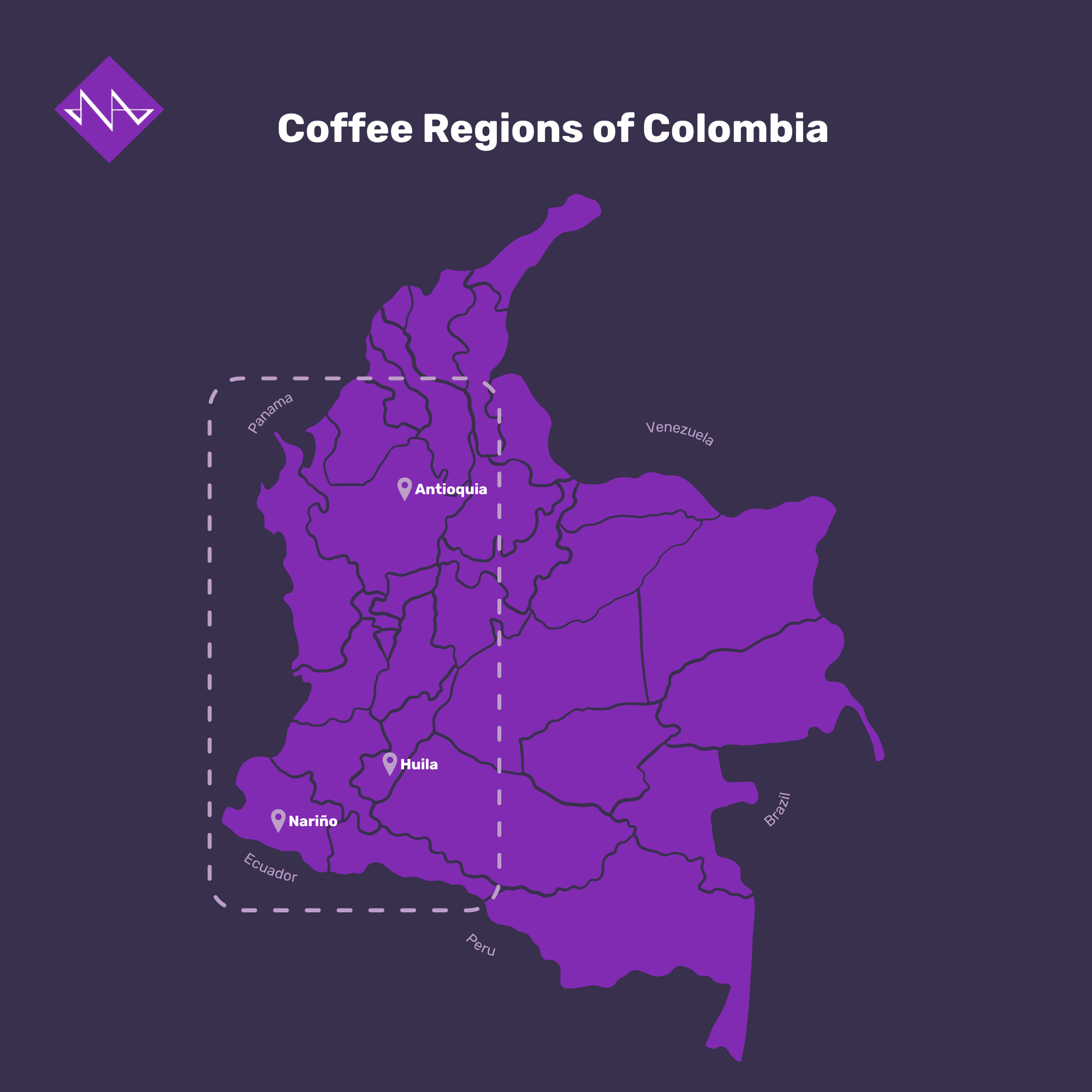
What Are The Key Coffee Growing Regions We Source From?
At Nordic Approach, we primarily source Colombian coffee from Huila, Nariño, and Antioquia, three of the country’s most important specialty coffee regions.
Huila
Located in southern Colombia along the Magdalena River valley, Huila is one of the country’s most celebrated coffee-growing regions. Coffee is typically cultivated between 1,400 and 2,000 meters above sea level in fertile volcanic soils influenced by nearby volcanoes and mountain ranges. The region’s warm days and cool nights help produce coffees with bright acidity, juicy sweetness, and layered fruit complexity.
Nariño
Nariño lies in the far southwest of Colombia near the Ecuadorian border. Due to its proximity to the equator and high elevations, often above 2,000 meters, coffee can ripen slowly despite the intense sunlight. This unique climate contributes to highly expressive coffees with floral aromatics, vibrant citrus acidity, and refined sweetness. The mountainous terrain also means most farms are extremely small and managed by hand.
Antioquia
Antioquia, located in northwestern Colombia, is one of the country’s largest coffee-producing regions and has a long history of coffee cultivation. The region features rolling mountain landscapes, consistent rainfall, and elevations ranging from 1,300 to 2,000 meters above sea level. Coffees from Antioquia are often balanced and approachable, with notes of chocolate, red fruit, citrus, and caramel sweetness.
Together, these regions produce a wide range of high-quality Colombian specialty coffees that reflect the country’s diversity of terroir, processing traditions, and smallholder expertise.
What Coffee Varieties & Flavour Profiles Can Be Found in Colombia?
The most common coffee varieties we source from Colombia are Caturra, Castillo, and Variedad Colombia, alongside smaller volumes of Tabi, Bourbon, and Typica.
Colombian coffee is known for its versatility and complexity. Depending on the region, altitude, and processing method, flavour profiles can range from bright and floral to rich and fruit-driven. Common tasting notes include berries, currants, mature plum, grapes, blackberry, citrus, and stone fruit, often accompanied by floral aromatics and a refined sweetness.
More specifically, Caturra is often highlighted for its strong cup potential when well-managed, but we also see excellent results from Castillo and Colombia varieties. When harvested at peak ripeness and carefully processed, these coffees can show far more sweetness, structure, and clarity than their more common reputation suggests.
Most producers we work with grow one to three varieties per farm. This diversification supports both cup complexity and agricultural resilience, helping farmers manage disease pressure and adapt to changing conditions.
What Makes Colombian Coffee Unique?
Washed Colombian coffee is valued for its clarity, balance, and structure, making it ideal for both filter and espresso. In specialty coffee, Colombia is known for producing everything from delicate, tea-like cups to rich, creamy, and intensely sweet espresso profiles.
Great coffee is not limited to headline varieties like Geisha. It is often found through closer relationships in the supply chain and working with farmers who show strong potential and a willingness to continuously improve.
At Nordic Approach, we work with suppliers who manage their own bodegas and buy parchment directly from farmers in our programs. Many of these producers operate at small volumes, which allows for more precise selection and detailed cupping.
Here are five key factors that help explain what makes Colombian coffees stand out on the cupping table:
1. Climate
- Tropical growing conditions with strong seasonal variation
- Warm days and cool nights support slow cherry maturation
- High rainfall combined with periodic dry stress shapes complex flavour development
2. Geography
- Coffee grown across three Andean mountain ranges
- High elevations dominate production areas
- Diverse microclimates create highly varied cup profiles
3. Genetics
- Predominantly Arabica production
- Disease-resistant varieties developed by Cenicafé
- Improved varietals introduced in the 1990s have strengthened cup quality over time
4. The FNC System
- The National Federation of Coffee Growers supports producers nationwide
- Provides technical assistance, market access, and infrastructure
- Plays a key role in knowledge sharing and production stability
5. Farmer Commitment
- Strong focus on continuous improvement and experimentation
- Willingness to invest in quality and processing innovation
- Key driver of Colombia’s specialty coffee reputation
Learn more from our Green Buyer, Juan Suarez, directly from origin!
The Colombian Coffee Supply Chain
Pickers
Coffee picking in Colombia is done entirely by hand, with pickers paid based on the volume of coffee cherries collected each day. During peak harvest, a picker can collect around 200–300 kg of cherries per day, while off-season work often includes tasks like pruning and fertilising. Most pickers do not have access to formal benefits such as pensions or health insurance, which is why premium pricing in specialty supply chains is important to support fairer livelihoods.
Farmers
Farmers manage coffee production, harvesting, and processing decisions on their farms. After processing cherries into parchment, they are paid in Colombian pesos per carga (125 kg). Coffee is then sold to exporters, cooperatives, or the FNC. While the system is built around washed coffee, alternative processing methods can sometimes lead to lower classifications if not pre-arranged with buyers.
Purchasing Points (Bodegas)
Parchment is delivered to local purchasing stations (bodegas), where it is sold and paid for immediately. We work mainly with suppliers who operate their own bodegas, allowing us to separate, cup, and evaluate small volumes individually before purchase approval.
Exporters
Exporters buy, grade, cup, and store the coffee before handling dry milling, bagging, logistics, and export documentation. They ensure coffees meet both physical and quality standards required for export.
Buyers
Buyers such as roasters or importers define the quality and profile requirements. We work closely with exporters and producers to support quality improvement, training, and fair pricing through long-term partnerships.

How is Coffee Pricing Structured in Colombia?
Coffee prices at purchasing points (bodegas) are calculated based on the value of exportable coffee (“excelso”) and lower-grade by-products (“pasilla”), using a simple weighted formula based on quantity and quality separation.
In most cases, local buying prices are slightly higher than the daily reference prices set by the National Federation of Coffee Growers (FNC), especially in competitive specialty-focused regions.
How is the Excelso Price Calculated?
“Excelso” refers to export-grade Colombian coffee after dry milling and screen size grading.
Its price is influenced by several key factors:
- The global Arabica C Market price
- The ICO Colombian Milds differential
- USD to Colombian peso exchange rate
- Export tax (FNC levy for national programs and services)
- Logistics, storage, and financial costs
Together, these inputs determine the final exportable coffee price used in the supply chain.
Want to learn more about this? Read more info here!
Quality Control: Yield, Moisture & Water Activity
Yield Factor
The yield factor measures how much parchment coffee is needed to produce a 70 kg bag of green coffee. It is calculated through physical sampling of defects, moisture, and density, and is a key driver of pricing and quality evaluation.
Moisture & Water Activity
Moisture content is critical for export stability and cup quality. While the FNC maximum is 12%, at Nordic Approach, we typically work within tighter specialty ranges:
- Moisture: 9.5%–11.5%
- Water activity: 0.40–0.58
These stricter parameters help preserve freshness and extend shelf life, which is especially important for Colombian coffees that can age quickly. We also prioritise fast shipment after purchase to maintain quality through the supply chain.
When is the Coffee Harvest Period in Colombia?
Colombia has a year-round coffee production cycle due to its geography and varying microclimates. Harvest periods differ by region, allowing for multiple picking seasons throughout the year.
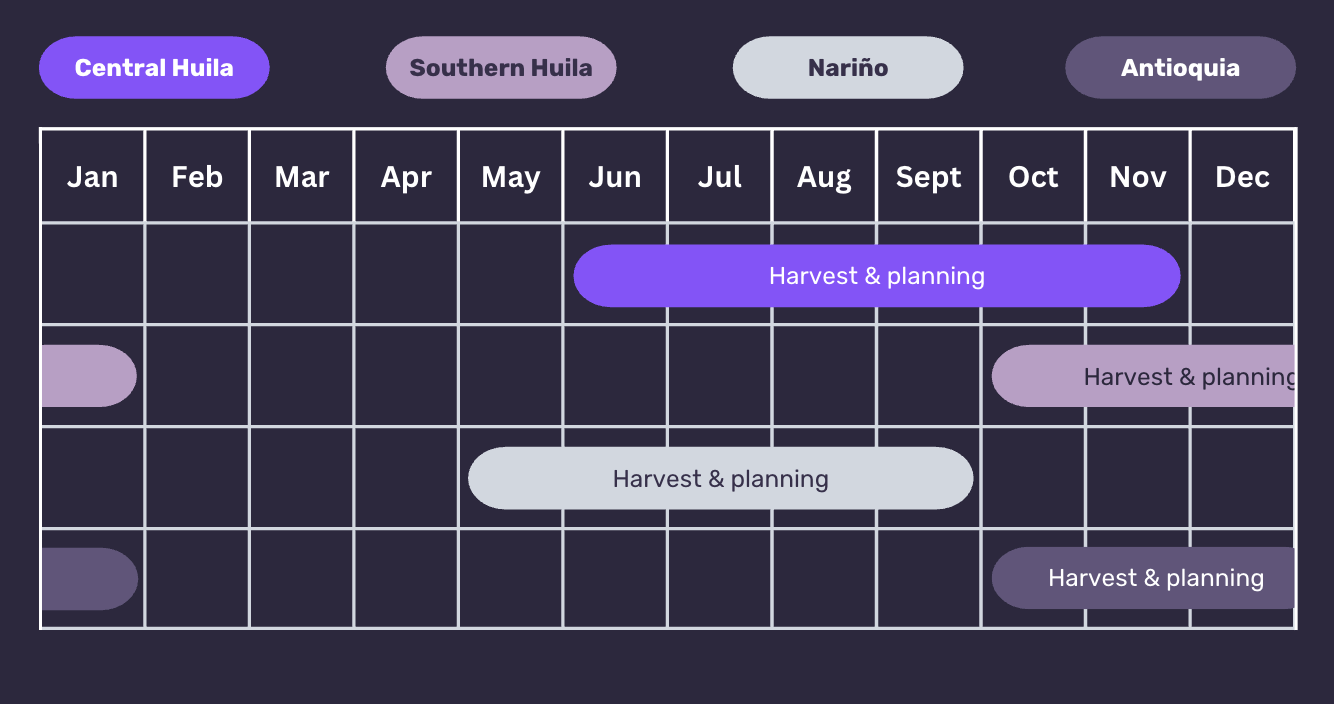
In Antioquia, the main harvest typically runs from October to January. Central Huila sees its primary harvest between June and November, while Southern Huila extends from September to January. In Nariño, harvest generally takes place earlier in the year, from May to September.
How is Colombian Coffee Harvested & Processed?
Most Colombian coffee we source is fully washed, though we also work with producers developing natural and honey-processed lots to add diversity in cup profiles.
Picking & Selection
Coffee cherries are typically hand-picked in multiple passes to ensure ripeness, with the second and third passes generally producing the highest-quality fruit. Labour availability and weather conditions can make selective picking challenging, so some producers also rely on careful hand-sorting before processing. Harvest conditions vary significantly by region, from prolonged rains in Huila to dry, high-altitude climates in Nariño, all of which influence final cup quality.
Parchment Delivery
Farmers sell coffee as parchment at local buying stations known as bodegas, which are operated by exporters, cooperatives, traders, or the FNC. Most coffee is assessed on physical quality and mixed into regional lots, but we focus on sourcing from partners who separate and evaluate coffees more carefully for specialty production.
Processing & Drying
After pulping, coffee is usually dry-fermented in small on-farm beneficios for 24–48 hours, with some producers using water-assisted fermentation for more control and consistency. Once washed and graded, coffees are sun-dried on rooftops or in parabolic dryers that protect them from rain and allow slow, even drying to below 11% moisture over 10–18 days.
Mechanical drying is more common in some regions, but we generally prioritise sun-dried coffees for better cup quality and longer shelf life.
Our Specialty Coffee Sourcing Strategy in Colombia
Our specialty coffee sourcing strategy in Colombia focuses on long-term relationships, traceability, and consistent quality. We work closely with producer groups, cooperatives, and specialty-focused exporters who purchase parchment directly from smallholder farmers across regions such as Huila, Tolima, Nariño, and Antioquia.
Most Colombian coffee producers cultivate small farms and deliver limited volumes, allowing for careful lot separation and detailed quality evaluation. Coffees that meet our standards for cup quality, moisture, and physical consistency are kept separate and individually cupped before approval and purchase.
While Colombia’s National Federation of Coffee Growers (FNC) provides farmers with a valuable safety net through its nationwide purchasing system, our sourcing programs aim to identify and preserve exceptional coffees that might otherwise disappear into larger regional blends.
We source both microlots and larger regional lots, helping smaller producers access the specialty coffee market while maintaining traceability and profile consistency. With a local team and cupping lab in Bogotá, we stay closely connected to producers throughout the harvest, allowing us to support quality development, improve transparency, and ensure farmers are rewarded for exceptional Colombian coffee production.

Logistics: How to Secure Your Colombian Coffee
Buying from Colombia takes some foresight because of the coffee harvest cycles and shipping timelines. Here are the three ways we usually work with roasters to secure their volumes:
1. Buying "Spot"
These are coffees already in our Belgium warehouse, cleared and ready to ship.
Due to different harvest times throughout the year, our shipments usually arrive at our warehouse between December – February, as well as September – November.
How it works: This is the most straightforward option. You can buy as little as a single bag, and we’ve already handled the sourcing, milling, and import logistics.
Check out SPOT available Colombian lots
2. Direct Shipments
If you’re moving larger volumes, like full containers or several pallets at once, buying on FOB terms is an option. To get the best selection, we usually need FOB orders locked in between April and August.
How it works: You get a more direct price point, but you take over the responsibility (and the cost of shipping and insurance) once the coffee is loaded at the port.
More information regarding FOB shipments
3. Forward Booking
This is essentially a middle ground. You can reserve a specific volume from the upcoming harvest, and we’ll hold it in our EU warehouse for you.
How it works: You can draw down your stock over a 6-month period. It’s a practical way to ensure you have a consistent supply of coffee throughout the year without having to take all the coffee (or the financial hit) at once.