We've been sourcing coffee in Ethiopia since 2012, and it remains one of our most important origins. It's also one of the most complex supply chains to navigate. So, to stay close to the process, we keep a permanent team in Addis Ababa overseeing key steps like dry milling and export preparation. That presence helps ensure the delicate florals from places like Yirgacheffe make it all the way to your roastery.
Ethiopian Coffee Regions & Flavour Profiles
Our coffee import focus is on Southern regions, Guji, West Arsi, Kochere, Yirgacheffe, Sidama and from Limu and Agaro in the West. Volumes vary from large microlots sourced from cooperatives and private washing stations to smaller lots from estates or producer groups. This variety of green beans from different regions ensures a diverse range of flavour profiles.
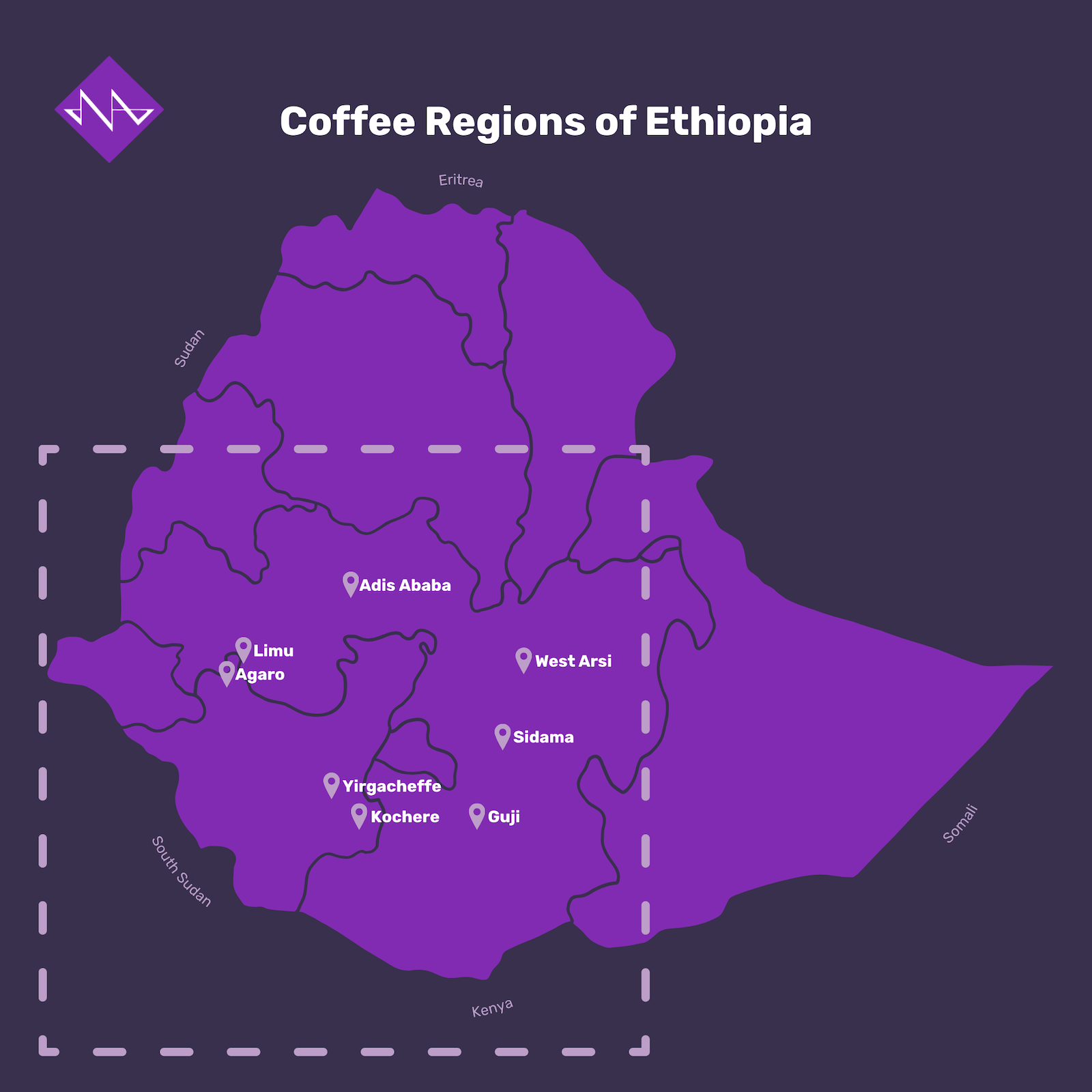
Guji is celebrated for its complex, fruit-forward coffees with vibrant citrus and berry notes, layered sweetness, and delicate floral undertones. The high altitudes and diverse microclimates contribute to consistent quality and distinctive character.
West Arsi produces coffees with a smooth body, balanced acidity, and rich, sweet flavours often reminiscent of stone fruit and chocolate. The region's volcanic soils and careful processing create approachable yet expressive cups.
Kochere, located in the heart of the Southern region, is known for its bright, floral coffees with lively acidity and elegant fruit notes. Its natural and washed coffees both showcase the area's unique terroir.
Yirgacheffe is iconic for its clean, aromatic profiles, marked by floral and citrus notes, refined acidity, and a silky mouthfeel. The meticulous washing and drying practices here highlight the subtleties of the coffee.
Sidama offers a wide range of flavours due to its varied microclimates, from sweet, juicy fruit and floral aromas to creamy, chocolatey undertones, making it one of Ethiopia's most diverse coffee regions.
Limu and Agaro, in Western Ethiopia, are known for their balanced, medium-bodied coffees with bright acidity, gentle fruitiness, and classic floral notes. These regions produce approachable and consistent profiles that complement the more experimental Southern coffees.
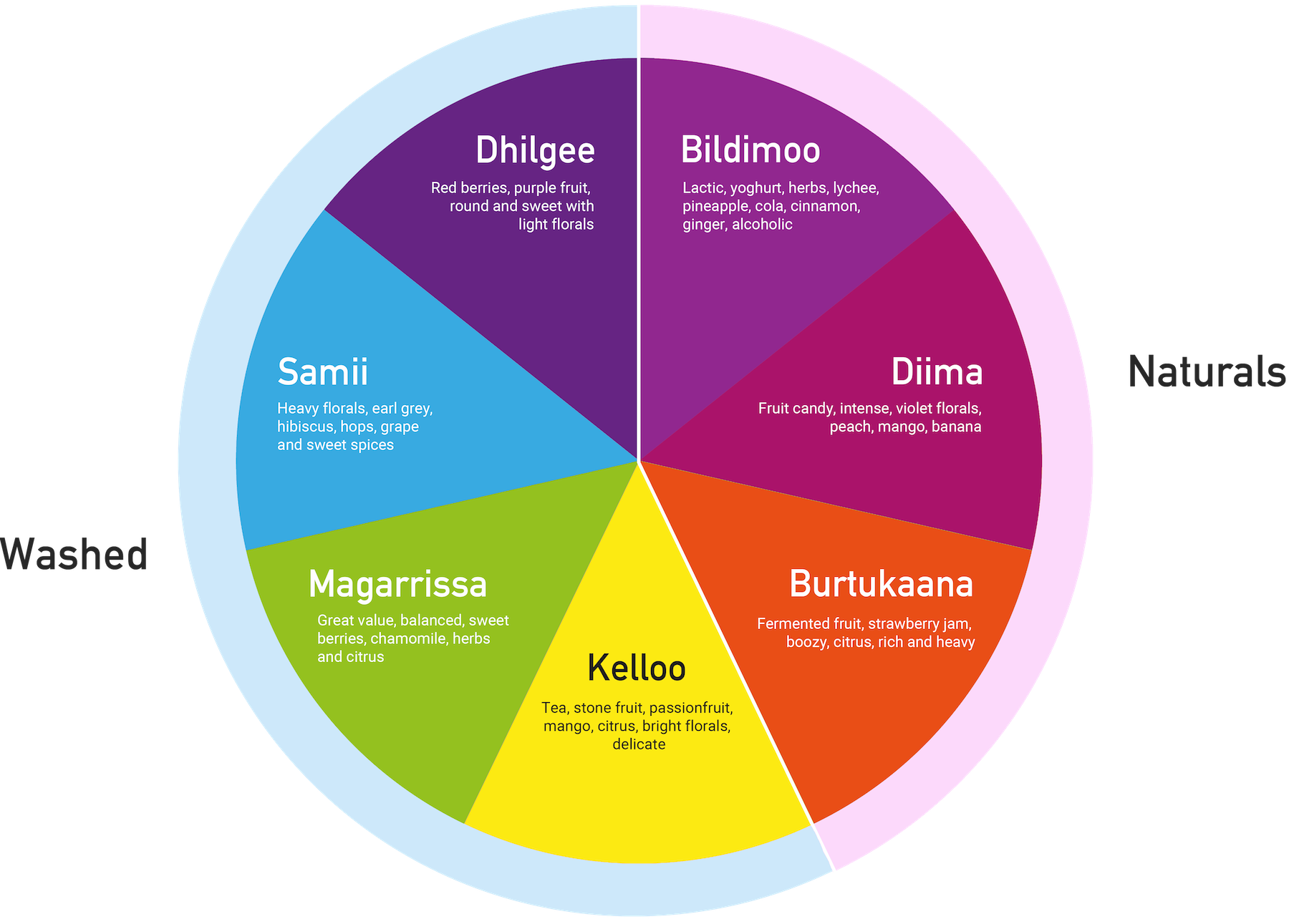
Together, these regions provide a rich palette of flavour profiles, reflecting Ethiopia's remarkable diversity in terroir and processing styles. To effectively categorise our Ethiopian coffees, our team created a flavour wheel, where we have allocated the different flavour profiles to colours.
Learn more about Ethiopias coffee geography: Exploring the Geography and Subdivisions of Specialty Coffee in Ethiopia.
Addis Ababa (Ethiopian HQ) is where our Ethiopian team operates from. Our offices in Addis Ababa and Oslo complement each other, each focusing on different parts of the sourcing process. In Addis, the team maintains first-hand communication with suppliers, oversees quality control directly at washing stations and mills, and manages milling, bagging, and export preparations.
Read more about our coffee sourcing team in Ethiopia here
What Coffee Varieties Are Grown in Ethiopia?
The coffee industry is defined by heirloom varieties and regional cultivars that produce a wide range of flavours associated with the origin. These diverse genetics, paired with microclimates, allow for both washed and natural coffee Ethiopian preparations.
Most green beans from Ethiopia are organically produced by default, with smallholders managing farms of fewer than 1,500 trees per hectare. Careful cultivation and small-scale management contribute to the exceptional quality and unique flavour profiles of coffee from Ethiopia.
Everything about Heirloom here
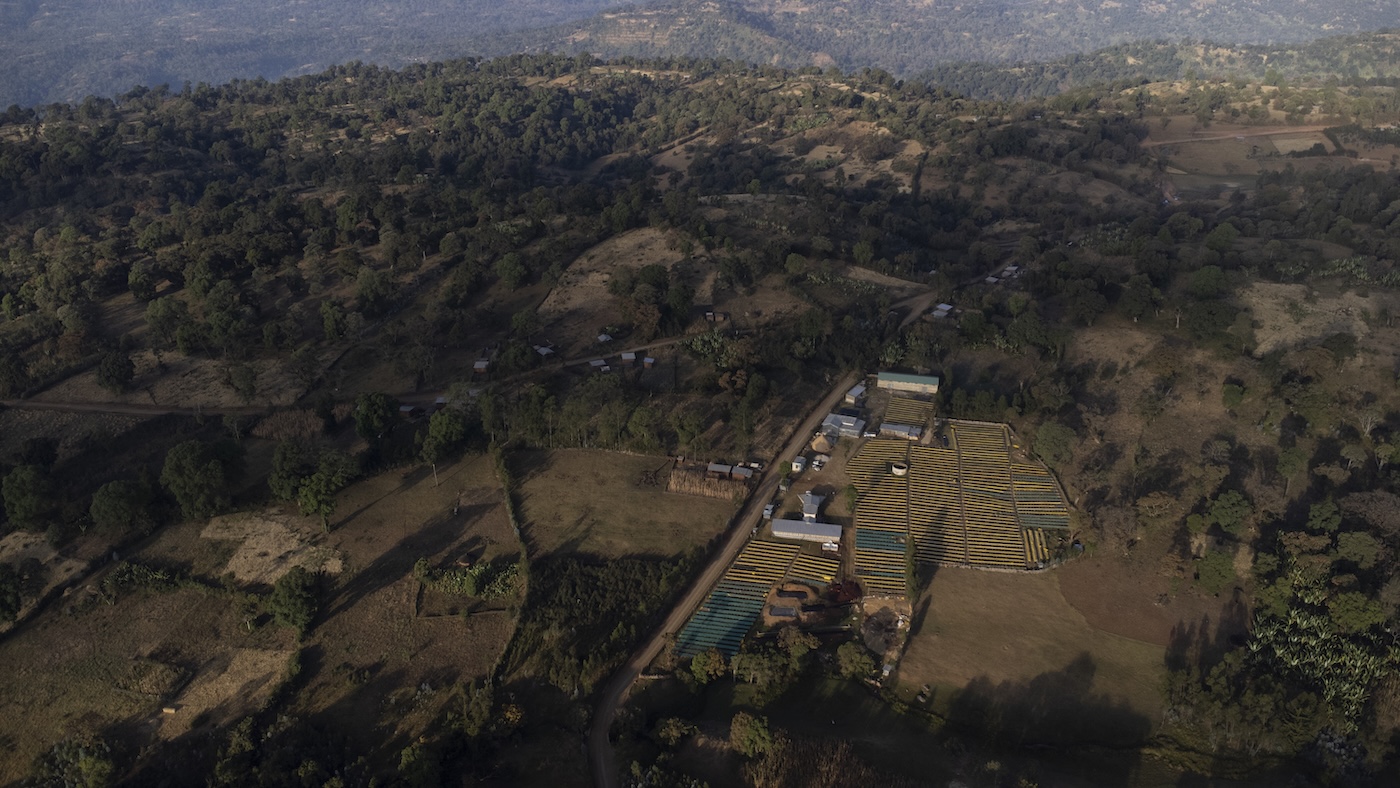
The Ethiopian Coffee Supply Chain
Larger volumes of 100+ bags are sourced from private or cooperative washing stations, whereas small or medium volumes can also come from single producers, small producer groups, and estates. While we try to return to the same producers, cooperatives, and washing stations, having a team on the ground in Addis allows us to also develop new relationships and projects with a diverse range of suppliers.
Learn more about our single farmer project in Ethiopia here.
When is the Coffee Harvest Period in Ethiopia?
The harvest follows a single main season, but timing varies by altitude, region and weather patterns. Picking typically begins in October at lower altitude areas and extends through January in higher-altitude areas. This staggered cycle is driven by temperature and cherry maturation: cooler, higher regions develop more slowly, pushing harvest later into the season.
The harvest aligns with Ethiopia’s seasonal calendar. Coffee cherries develop during the main rainy season, and are picked during the long dry season, when conditions are more stable for harvesting and drying. Ethiopia does not have a meaningful secondary or “fly” crop.
Regional differences are key. Areas like Limu tend to harvest earlier, while higher-altitude regions such as Yirgacheffe, Sidama, and Guji peak later. Weather patterns, especially rainfall distribution, play a critical role. Consistent rains support cherry development, while unexpected rainfall during harvest can slow drying and impact quality. Increasing climate variability is already shifting timelines and adding risk during both ripening and post-harvest stages.

Post-Harvest: How is Ethiopian coffee processed?
Washed (Grade 1): For Washed coffee, also called wet-processed coffee, cherries are depulped after harvest to remove the skin and most of the pulp, then fermented to break down the remaining mucilage before being thoroughly washed and dried. Most lots are fermented for 24–48 hours and dried on raised beds. Here, we're looking for that classic, clean profile that Ethiopia is known for.
Naturals: Natural processing is one of the oldest ways of turning coffee cherries into green coffee. Instead of removing the cherry right after picking, ripe coffees are dried whole with the skin and pulp still on. Only after they reach the right moisture level are the dried fruit layers removed to reveal the green bean inside. In Naturals, look for "clean" profiles, lots that show intense berry and tropical notes without getting boozy or over-fermented.
Experimental Preps: Produced using innovative varieties, fermentation processes, or drying methods, these experimental coffees develop distinctive flavours and often appear as microlots or special preps for specialty roasters. We do work with a few partners on anaerobic and honey processes. We keep these volumes small and focused on lots that really benefit from the extra fermentation, usually for roasters looking for a specific competition or high-end release.
Decaf: We use the Sugarcane (Ethyl Acetate) process, which is a natural method that avoids high pressure or heat. It’s a gentle way to remove caffeine while preserving the actual character and acidity of the coffee.
How does Coffee Grading work?
Ethiopian coffee is graded based on both physical quality and cup profile. The system ranges from Grade 1 to Grade 5, with Grade 1 representing the highest quality, typically defined by clean cups, distinct flavor profiles, and minimal defects. Grading is carried out through a combination of visual inspection and cupping, often centralised through dry mills or washing stations. Nordic Approach is importer for washed grade 1 coffees, naturals, and experimental preps.
Read more about dry milling in Ethiopia and why quality depends on it
Logistics: How to Secure Your Ethiopian Coffee
Buying from Ethiopia takes some foresight because of the coffee harvest cycles and shipping timelines. Here are the three ways we usually work with roasters to secure their volumes:
1. Buying "Spot"
These are coffees already in our Belgium warehouse, cleared and ready to ship.
Our shipments usually arrive to our warehouse between March and July. Our pre-contracting protocols are determined by price fluctuations and the estimated local supply and demand patterns.
How it works: This is the most straightforward option in SPOT buying. You can buy as little as a single bag, and we’ve already handled the sourcing, milling, and import logistics. It’s the lowest-risk way to get coffee into your roastery quickly.
Check out SPOT available Ethiopian lots
2. FOB (Free On Board)
If you’re moving larger volumes, like full containers or several pallets at once, buying FOB from the port in Djibouti is an option.
To get the best selection, we usually need FOB orders locked in by January.
- How it works: You get a more direct price point, but you take over the responsibility (and the cost of shipping and insurance) once the coffee is
- loaded at the port. We handle everything up to that point, including the quality control in Addis.
More information regarding FOB shipments
3. Forward Booking
This is essentially a middle ground. You can reserve a specific volume from the upcoming harvest through Forward Booking, and we’ll hold it in our EU warehouse for you.
How it works: You can draw down your stock over a 6-month period. It’s a practical way to ensure you have a consistent supply of a specific Guji or Yirgacheffe throughout the year without having to take all the coffee (or the financial hit) at once.