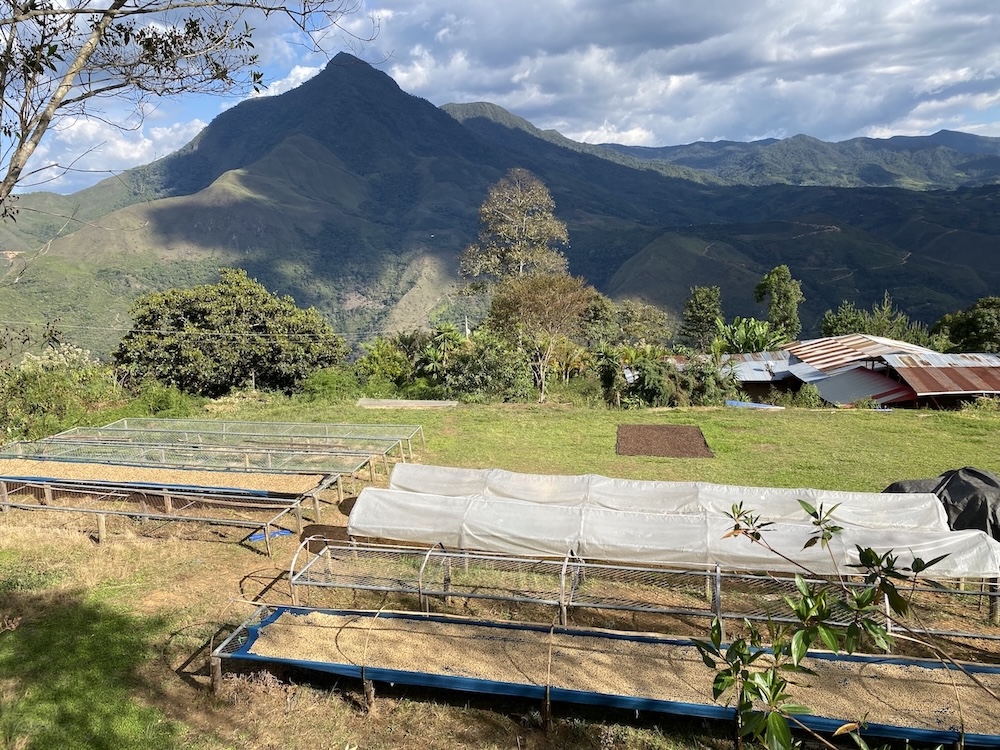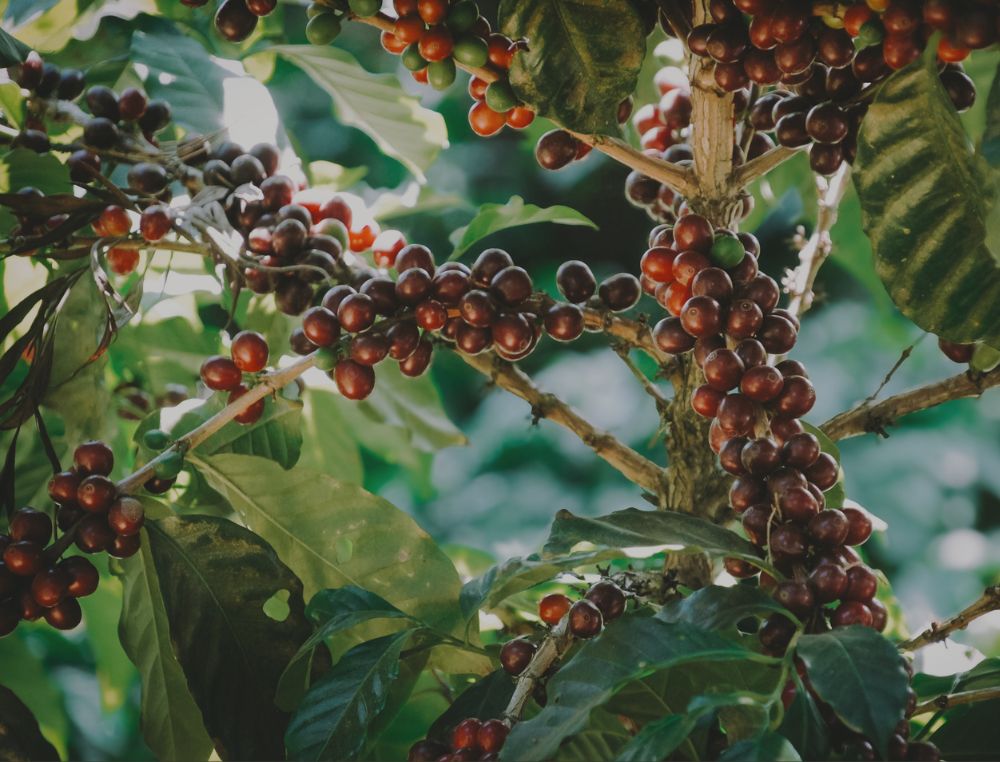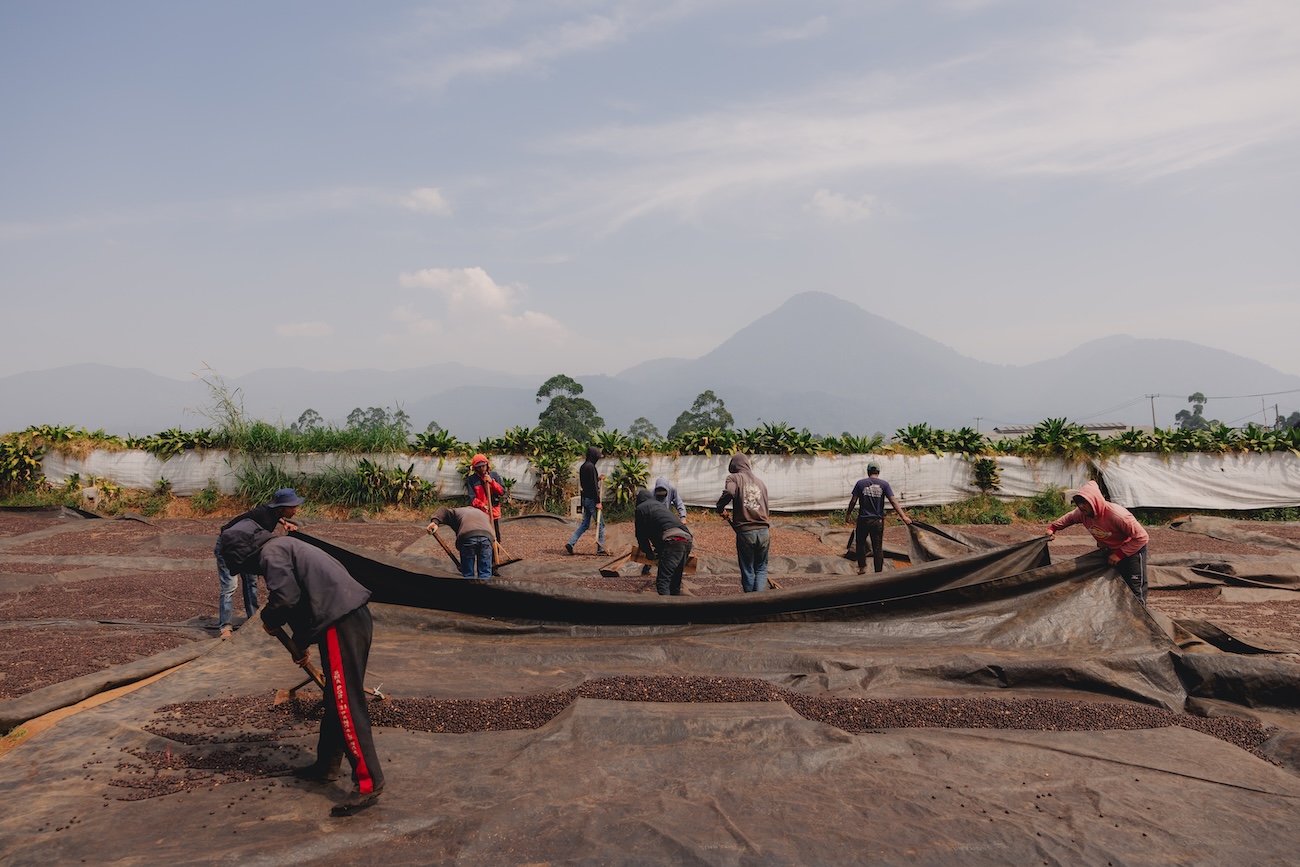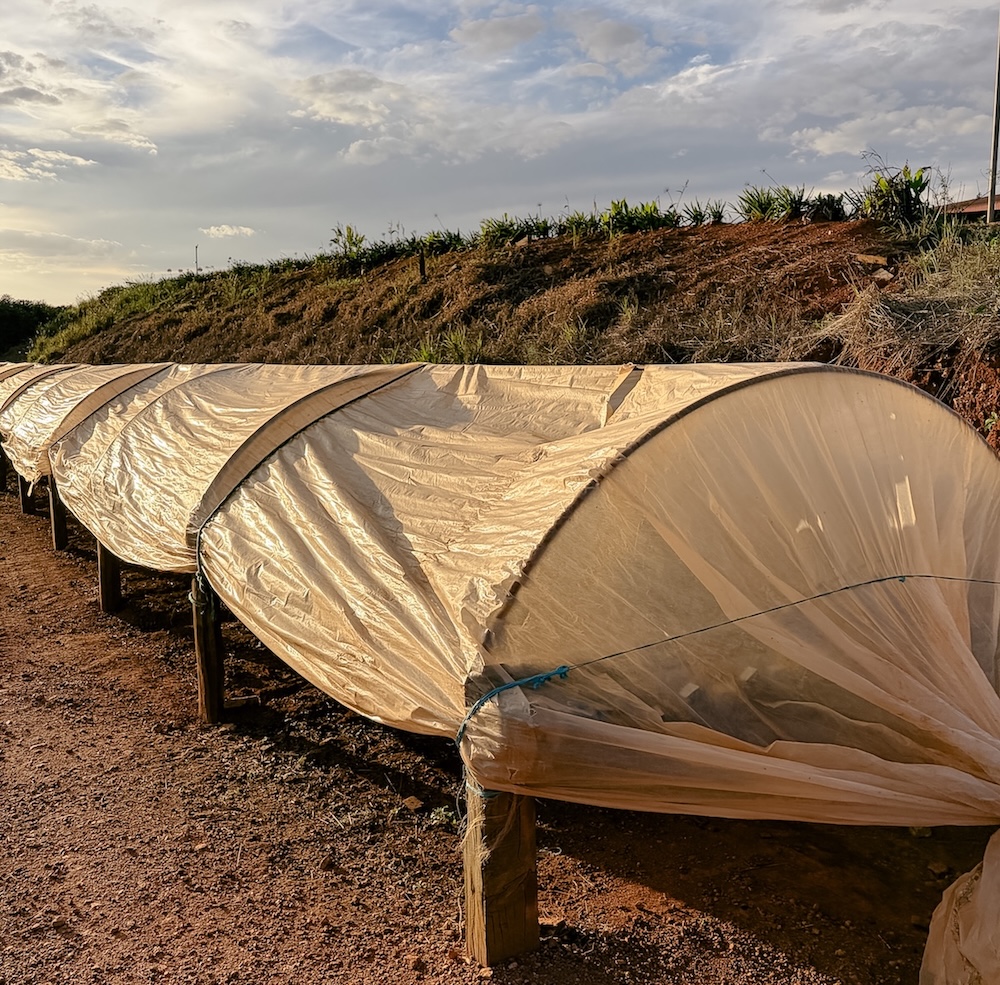
Brazil’s 2026 harvest may have arrived later than usual, but our coffees are coming much earlier than expected, with our first shipments already landed in Belgium! Our first arrivals in late September are a selection that reflects a more focused approach to quality, processing and regional sourcing.
This year, we’ve put more emphasis on manually picked coffees, higher cup scores, distinctive regional profiles and more controlled fermentation. We’re also being more intentional about which producers and areas we focus on, with the aim of building coffees that are not only exciting in the cup, but more consistent and repeatable from year to year.
First Arrivals: Jaguara and Natalia Brito
Our first coffees from Jaguara have already landed, with more coming very soon.
The first arrivals will include a broad selection of microlots from some of our staple producers, with a particularly strong focus on fermentation. You can expect coffees from Rosimeire Aparecida Guerra, including Sítio Vargem Grande, coffees from Natalia Brito and Toca da Jaguara, as well as special fermentation lots like Gael and Benício.
There will be a wide range of processing styles to explore, from lightly fermented naturals and extended fermentation through to funky anaerobic coffees. More fermentation-driven coffees from Jaguara will arrive later in the season, with another shipment expected to arrive in late October, including our Mantiqueira Collective and peaberry lots from the same concept.
Read the story behind: Gael & Benicio: Special lots by Jaguara
A more focused Jaguara program
Our Brazil buyer, Josh Coleman, has worked closely with Natalia behind the scenes this year to make the coffees sourced through Jaguara even more distinctive and quality-focused.
In practical terms, the program focuses on high-quality, manually picked coffees with fermentation-driven profiles. Processing ranges from 24-hour patio fermentation (using the Vulcan method or drying boxes) to 70-hour barrel anaerobic fermentation, with every coffee scoring highly in the cup.
We’re also being more deliberate about when different coffees arrive. Rather than treating the harvest as one single window, we’re scheduling arrivals according to where the coffees are sourced and the characteristics we want to preserve.
A good example is the higher-elevation area associated with Beija Flor, a plot of land also owned by Natalia Brito. Because of the terrain, these coffees are manually picked and have a very different profile from the earlier harvest coffees, leaning more towards tropical fruit and mango. Josh expects these coffees to be among the best in the program, but because the harvest comes later, the earliest arrivals are expected around December.
Building stronger regional identities
Another important development this year is how we’re approaching producer groups and regional sourcing.
Rather than simply looking for good coffees from across a region, we’re identifying specific producers, locations and profiles that perform consistently and building longer-term programs around them. The idea is to focus heavily in areas where we see distinctive characteristics, while making those profiles easier to recognise and return to year after year.
Our Mantiqueira Collective is a good example. The lots selected for this product are being chosen more deliberately around long-standing Nordic Approach microlot producers who have become familiar names on our offerlist, such as Natalia Brito, Rosimeire Aparecida Guerra, Cleber Thiago, Ivan Prado and Carlos Rafael Fagundes.
The goal is not only to bring together good coffees, but to define and preserve characteristics that customers can come to associate with a particular place or group of producers. Lambari, for example, is a microregion associated with Rosimeire and a classic red-fruit profile.
SMC: Microlots, Luzia Collective, and Caxambu
We also have four shipments from SMC either departing soon or currently being contracted. The first PSS samples are expected during September and October, with arrivals starting around late October.
Expect naturals, anaerobics, and extended-fermentation naturals from single farms we work with year after year, including Das Almas, Maranhao, Santa Terezinha, and Sítio Pico do Mirante. Plus you’ll find Luzia Collective and coffees from Caxambu, a new farm for us in Três Pontas, Sul de Minas producing high-scoring, competition-level coffees. We first visited Caxambu in 2024, and have been working to procure these coffees since.
Learn more about The Luzia Collective: A female produced coffee from Sul de Minas
Stockler and the Muzambinho Collective
Our partner Stockler, part of NKG, will bring another side of the Brazil program to the offerlist. The first shipment is expected to arrive in early November and will include naturals and extended-fermentation naturals from microregions including Muzambinho, Santana da Vargem and Jeriquara (Alta Mogiana).
These are coffees we’re particularly interested in for their value-for-money proposition, and you can also expect to see our Muzambinho Collective on the offerlist.
Muzambinho Collective is a project we’re developing with Stockler from scratch, and it’s still in its early stages. The short-term goal is to build a quality program that increases representation from producers in Muzambinho by identifying coffees with quality and potential that can otherwise be overlooked or sold into generic blends due to limited access to the specialty market.
By working selectively with our partners to identify these lots, we’re building a regional blend that highlights the character of Muzambinho while creating a product with the potential to deliver greater value to producers and the supply chain over the long term.
The long-term goal is to create something with consistent value for both customers and the supply chain; a quality coffee that can be repeated year after year. For roasters looking for products with a longer-term story, this is a project worth keeping an eye on.
To Summarise
The 2026 Brazil program is moving faster than usual. The first coffees will be available from September, with further arrivals throughout October, November, and December.
Expect a strong selection of manually picked microlots, more fermentation-driven processing, distinctive regional profiles and a mix of established producers and new projects. At the same time, we’re continuing to develop larger-volume products and collectives designed around consistency, value and long-term relationships.
Pre-shipment samples for the first shipments are available now, and more samples will become available as more coffees make their way to Europe.
If you’re looking for smaller quantities, keep an eye on the offerlist as the new arrivals land. If you’re planning for larger volumes, particularly 100+ bags — get in touch with our sales team early to discuss Forward options and secure the coffees you need for the season ahead.