What is the difference between a regional and family coffee blend?
Not every coffee needs to come from a single farm to have a clear and traceable identity. Some of the coffees we source from Peru are regional coffee blends, bringing together multiple farmers to create consistent, volume-oriented products. Others are family coffee blends, combining coffee from a much smaller group of farms, often connected through family, a hilltop, and shared processing practices.
At Nordic Approach, both approaches have a place in our sourcing strategy. Regional coffee blends give roasters access to attractive volumes and reliable profiles, while family coffee blends offer opportunities to work more closely with producers and develop coffees with a more distinct microregional identity.
Our growing focus on family and microregional coffee blends is not about moving away from our larger staple coffee blends. It is about creating more opportunities for differentiation and finding the right approach for the people producing the coffee, the volumes available, and the roasters buying it.

What is a regional coffee blend? Volume, value, and reliable profiles
Our staple regional collective lots are designed to give roasters access to larger volumes of Peruvian coffee at an attractive price point. By bringing together coffees from different purchasing points within a region, we can build solid, repeatable profiles that work well as part of a roaster's core offering.
Products such as Estrella Divina from La Coipa and our Cutervo lot are examples of this approach. Depending on the product, these blends can bring together several varieties, each contributing something different to the overall cup. The result is often a versatile, washed profile, with notes of milk chocolate, berries, or brown sugars.
Regional coffee blends can also play a role in how you build your coffee menu and support the communities you source from. Pairing a larger regional lot with microlots from the same farmers or community gives you different ways to showcase their coffees, while creating a clearer connection between the products you offer.
As our Sales Rep, James Winter (who used to be a roaster himself) explains, “If I were a green buyer for a roastery tomorrow, I would consider aligning my large volume blends and microlot sparkle purchases as much as possible. When a roaster offers both regional coffee blends and microlots from the same community it creates more links to a specific region. It materially increases the sense of menu cohesion towards customers. I like pie. If given the option, I'd like the whole pie and not just the slice (if its a good pie). Also: I can't have the slice of pie if the whole thing doesn't get baked!”
How we build a consistent profile and secure volume
The starting point is the profile we're looking for. We communicate our expectations clearly to our suppliers and use regular cupping calibration to make sure we're aligned. This helps us source coffees that meet the intended profile while keeping the price point attractive at larger volumes.
These lots also play an important role in how we plan our shipments. We contract them early to secure anchor products for our offerlist and help our suppliers access third-party financing. Early contracting has also tended to result in better pricing, although this can vary from season to season.
What is a family coffee blend? Smaller quantities with microregional profiles
Family coffee blends work on a much smaller scale. These are highly microregional coffees, typically combining the production of one to four farms within the same area; sometimes a single hilltop or a group of neighbouring farms.
Lot sizes of around 30–50 bags make them an attractive middle ground between individual microlots and larger regional coffee blends. They offer more volume than a typical small producer lot, still maintaining the identity of the people and place behind the coffee.
For families, pooling their production makes it easier to bring a commercially viable lot to market than selling several smaller lots separately. It creates a more straightforward route to a guaranteed volume sale, without requiring the coffee to compete solely on microlot pricing.
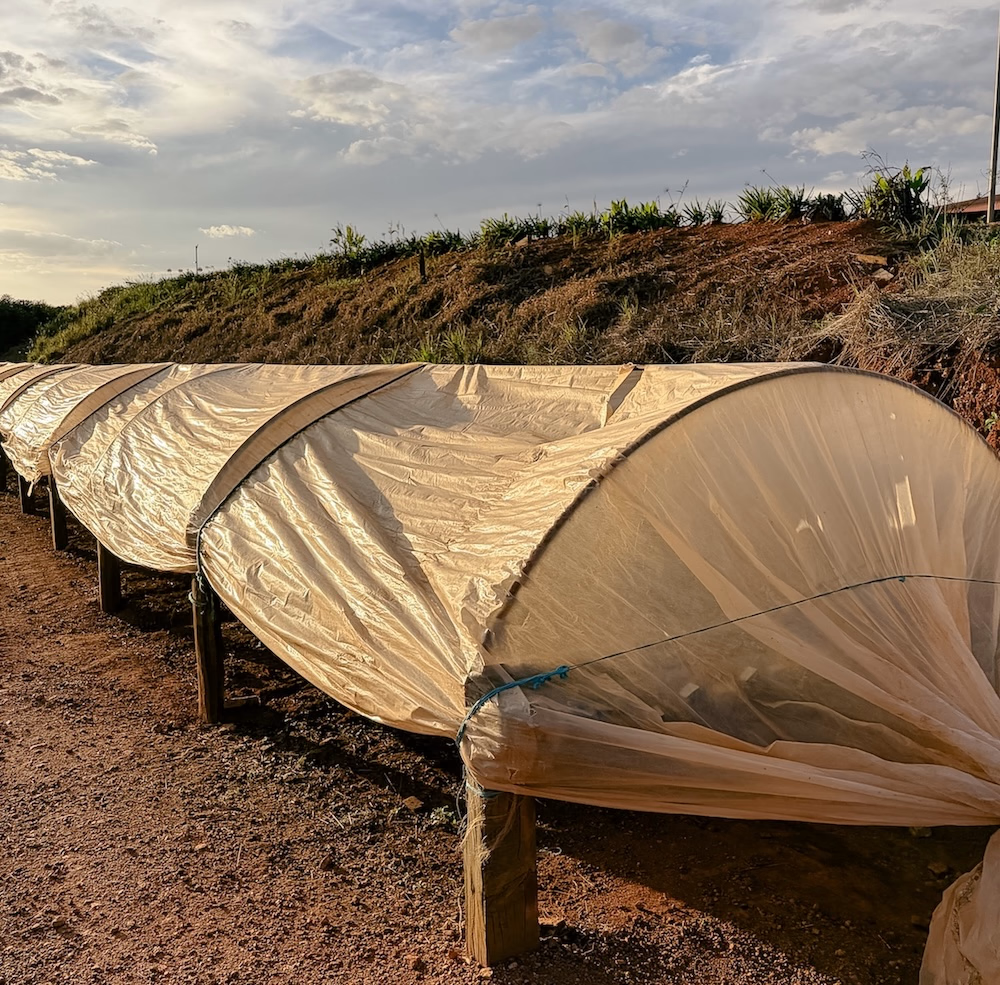
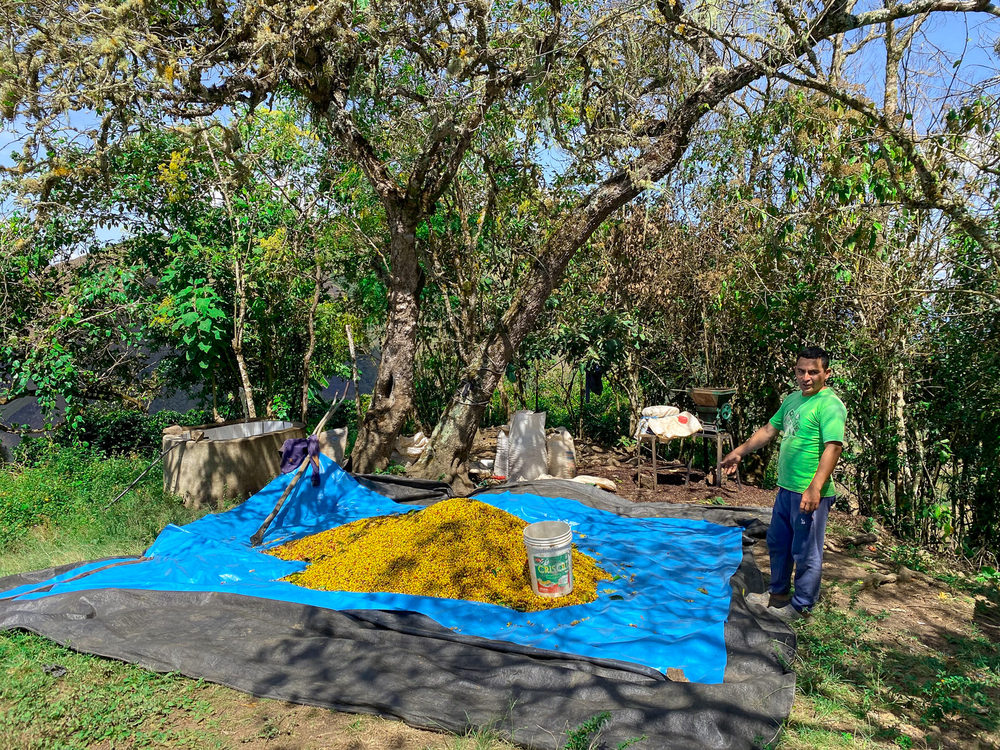
There are also practical advantages to how these coffees are prepared. Centralised processing and drying can help bring greater control and consistency to the final lot, particularly when individual farms have limited infrastructure. Rather than managing several separate coffees with different procedures, the family can work towards a more uniform result.
For Nordic Approach, the opportunity goes beyond simply combining volume. Family lots allow us to build relationships with the people behind the coffee and identify what makes each group distinctive.
As Rory Rosenberg, our Green Buyer for Peru, explains:
“Family coffee blends have developed through a shared opportunity between us and our suppliers. When you visit the farms, you start to see how the family's production, infrastructure, and the people involved fit together. That's where we can create something differentiated: a product that makes sense for the family and for the market.”
What makes a microregional blend different?
The value of a family blend is that each one can have its own identity. Altitude, varieties, processing infrastructure, and the family's approach to production all influence the final coffee.
Take the Familia Paredes in Cutervo. Their farms sit close to 2,000 metres above sea level, offering conditions that can contribute to the quality and character of their coffees.
Familia Tocto in San Ignacio is known for consistently fruit-driven profiles, while Familia Alarcón has more processing resources, including African drying beds and fermentation tanks. These differences give each family a distinct starting point and create opportunities to develop products that stand apart from broader regional offerings.
Other products may be more closely tied to a particular microregion or processing approach. La Higuera, for example, comes from a small area in Colosay. Its single-variety composition and shared frutas maduras processing approach help create a more uniform coffee, with a cleaner, more pronounced red-berry character.
The distinction is not simply about which coffee tastes better. It is about what each sourcing model makes possible: a broader, volume-oriented regional profile on one hand, and a more specific combination of people, place, and production on the other.
Family coffee blends can also offer a useful middle ground for roasters who want to explore more distinctive coffees without committing to several separate microlots.
Developing family coffee blends in Peru
The opportunity here is to work more directly with families on processing for a specific lot. This year, tighter supply has also made it more important to look carefully at the volumes available and how we can build a balanced offer.
In the future, rather than only buying the coffee a family produces, we could agree on a particular approach together, for example, developing a 30-bag lot using a 96-hour fermentation process, with an incentive to support the additional work involved. The idea is to create room for experimentation while giving families a clearer commercial opportunity.
As Rory puts it:
“With family lots, there's an opportunity to move from defining the profile to influencing the process together. We could work with a family to develop a 30-bag lot using a specific fermentation approach, incentivise that work, and agree on how to handle the result. It's a way to explore what's possible while still supporting the producer commercially.”
This is an area of potential rather than an established protocol. The increase in family lots offered this year has highlighted opportunities to develop this approach further, and we see room to build on it as we continue working with our suppliers.
Larger regional coffee blends remain important for securing volume, offering value, and giving roasters dependable options. Family coffee blends allow us to explore more specific profiles, support smaller groups of producers, and create products with a clearer connection to the people behind them.
The goal is not to choose one approach over the other. It is to understand what each can offer, work with our suppliers to make the most of the coffees available, and give roasters more ways to find the right coffee for their needs.