Our Green Buyer Josh Coleman recently returned from Rwanda after spending time with our long-term partners at Mahembe and Gitesi, along with visits to a few new potential projects in other parts of the country. Overall, it was a successful trip, with a clear focus on strengthening supplier relationships and spending time with both existing and prospective partners.
One of the main outcomes is a clearer direction for Nordic Approach as we continue to diversify our Rwanda offering while staying close to our core partners. The coffee harvest is now slowly wrapping up, although it’s running a bit later than expected due to slow ripening and inconsistent rainfall. Volumes are expected to be lower than last year, due to a low cycle crop and less favourable flowering conditions, with regional estimates pointing to around a 30% year-on-year drop.
Even with lower volumes, quality expectations remain strong. In fact, we see great potential for quality this year, as the slower pace and more manageable volumes at the washing stations we work with have allowed for extra sorting and attention to detail. At the same time, reduced supply is likely to keep the market competitive throughout the season.
Curious about updates from other origins? Read our harvest update for the latest news on all incoming origins.
What does this mean for quality & our expected lineup?
The good news is that our contracts were already in place with our key suppliers quite early in the season. Finalising our shipments early gives us more room this year to focus less on availability and more on differentiation and quality.
This season we’re working on a range of exciting projects across Rwanda, including:
- Our classic partner offering with outstanding cup quality from community outgrowers
- Hilltop separations
- Experimental processing (including anaerobic washed)
- Variety-focused lots
- Stronger naturals and experimental profiles later in the season
- Coffee from new areas
Shipments & product focus
We’re planning for up to three shipments from Rwanda, all expected to arrive by October. The first two shipments have already departed, significantly earlier than last year, when our first shipment only went out in August. These coffees are especially interesting, as the list includes several new and experimental lots that really show where things are heading this season. Pre-shipment samples for our first departures are already in Oslo and tasting great!
Here’s what you can expect to see on the offer list:
Mahembe
Mahembe Washing Station is owned and managed by Justin Musabyimana and Willy Gihozo, a father-and-son team and long-time partners of Nordic Approach in Rwanda's Western Province. They process cherries from local outgrowers and smallholder groups at their washing station, alongside cherries from their own farm, which are exported separately as single farmer lots. These are the lots we are sourcing from them this year:
- Kizenga – A new hilltop separation from a small farmer group, including coffee grown by Justin. This comes from very high elevations of 1900–2100m and includes a smaller group of farmers (in comparison to the standard outgrower group delivering to Mahembe). The lot is made up of 20% Murundo Geisha and 80% Red Bourbon cultivar. It’s a very delicate, refined coffee.
- Mahembe Murundo – A newer farm area we used this year for processing experiments, including anaerobic washed coffees made at our request. It is still owned and operated by Willy and Justin. These lots include Geisha and SL28.
- Single producer lots – The classic microlots we know and love by Justin at Mahembe, highlighting individual producer expression from within the station.
Gitesi
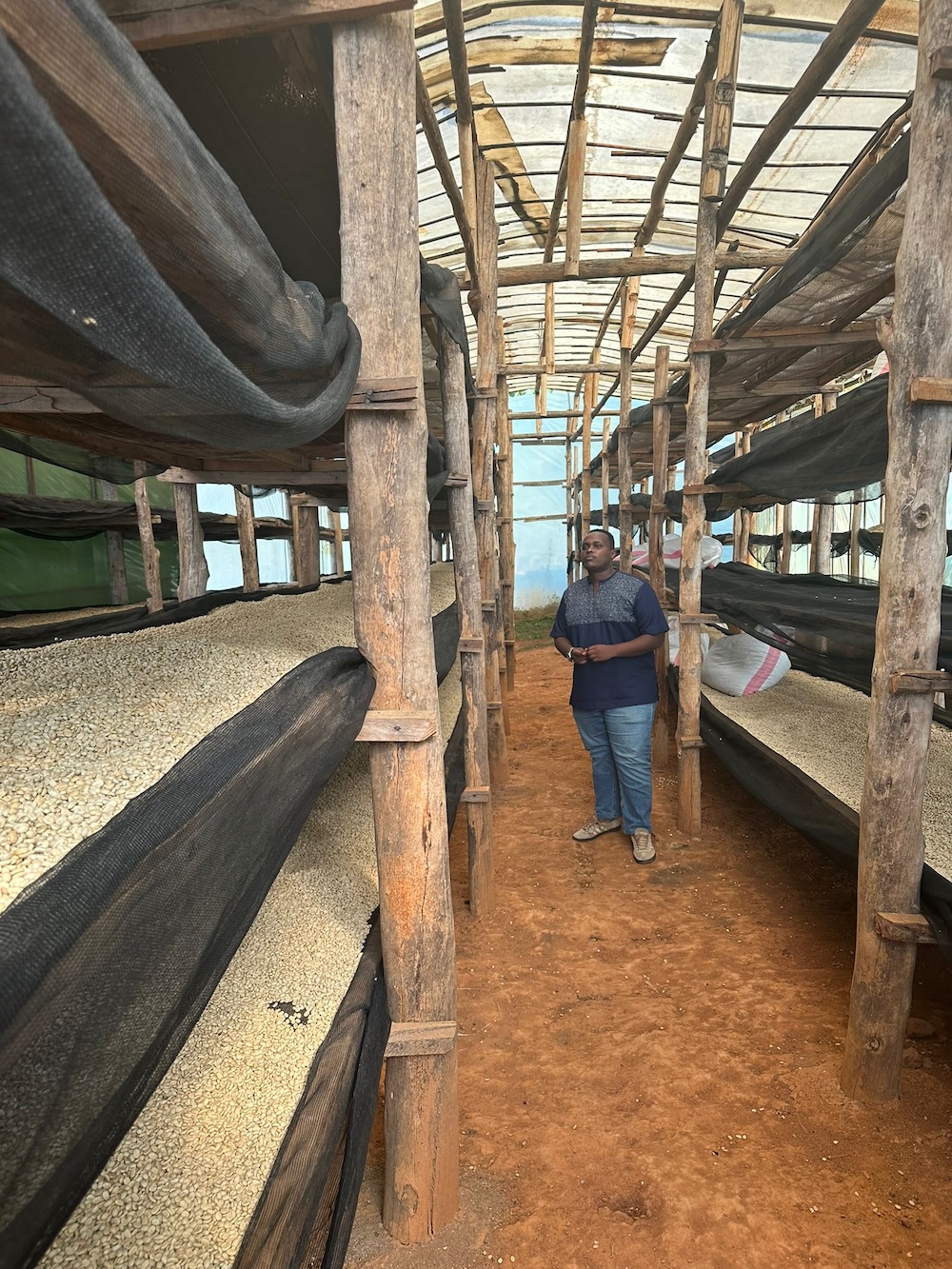
Coffees from Gitesi Washing Station are either en route or will be on their way soon, in our next shipments, including naturals and anaerobic fermentations. Gitesi is a privately owned washing station run by Aime Gahizi and his father, Alexis, also located in Nyamasheke District in Rwanda’s Western Province. They too, collect cherries from surrounding outgrowers and cultivate their own coffee exported as single producer lots. This is what you can expect this year:
- Gitesi Outgrowers – Expect the classic Gitesi washed lots: elegant, clean coffees from surrounding smallholders processed at the Gitesi Washing Station. Very consistent, structured profiles like we’ve come to expect from them.
- Single producer lots – Aime Gahizi, owner of Gitesi Coffee, continues to push quality at every level and has become a leading producer in Karongi. As his farm continues to expand, so does his vision: building a more sustainable coffee business while making better use of every part of the coffee tree.
- Mbogo by Gitesi – A new trial featuring a hilltop separation from a small group of farmers, processed at Gitesi. By identifying areas with consistently strong cherry quality and good production volumes, Aime hopes to create more recognition and value for this community.
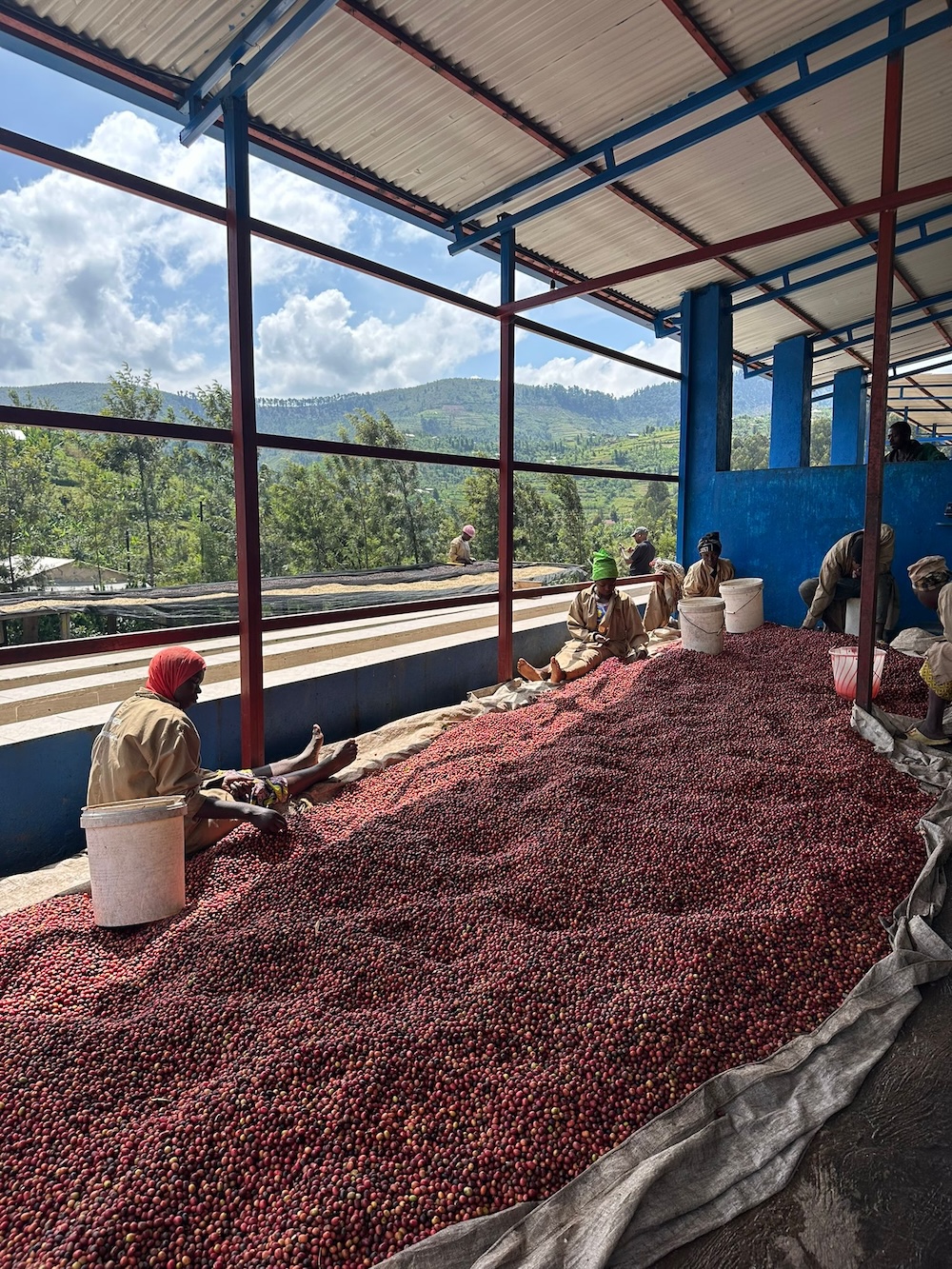
Karengera
This is a well-known western station that’s been a bit under the radar in recent years, and recently changed management. Though we haven’t bought before, it’s a coffee we know well. These lot we are sourcing has been cupping really well so far, some with distinct lactic profiles coming through in blind tastings at origin. As it’s our first time sourcing this coffee, we have started with smaller volumes this year.
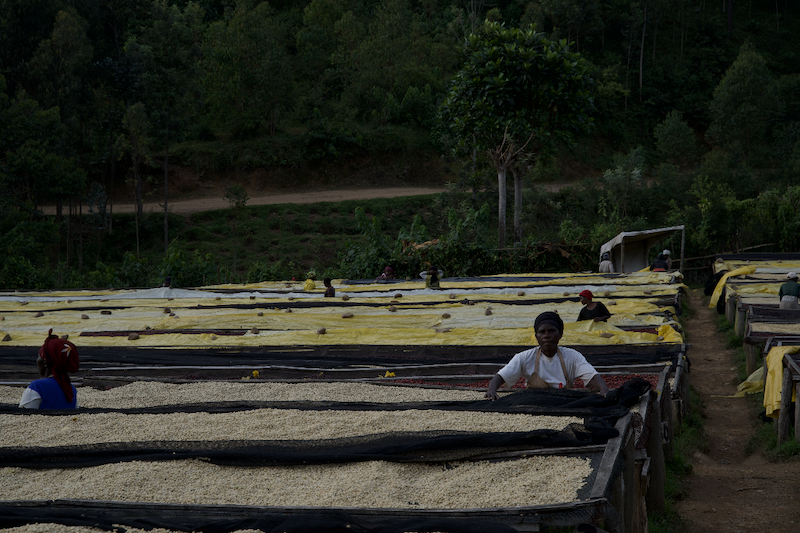
Kigoma (Southern Province)
Our first lot from the Southern Province after a number of years! “Kigoma” is a reference to the “sector” or area in which the coffee is picked.
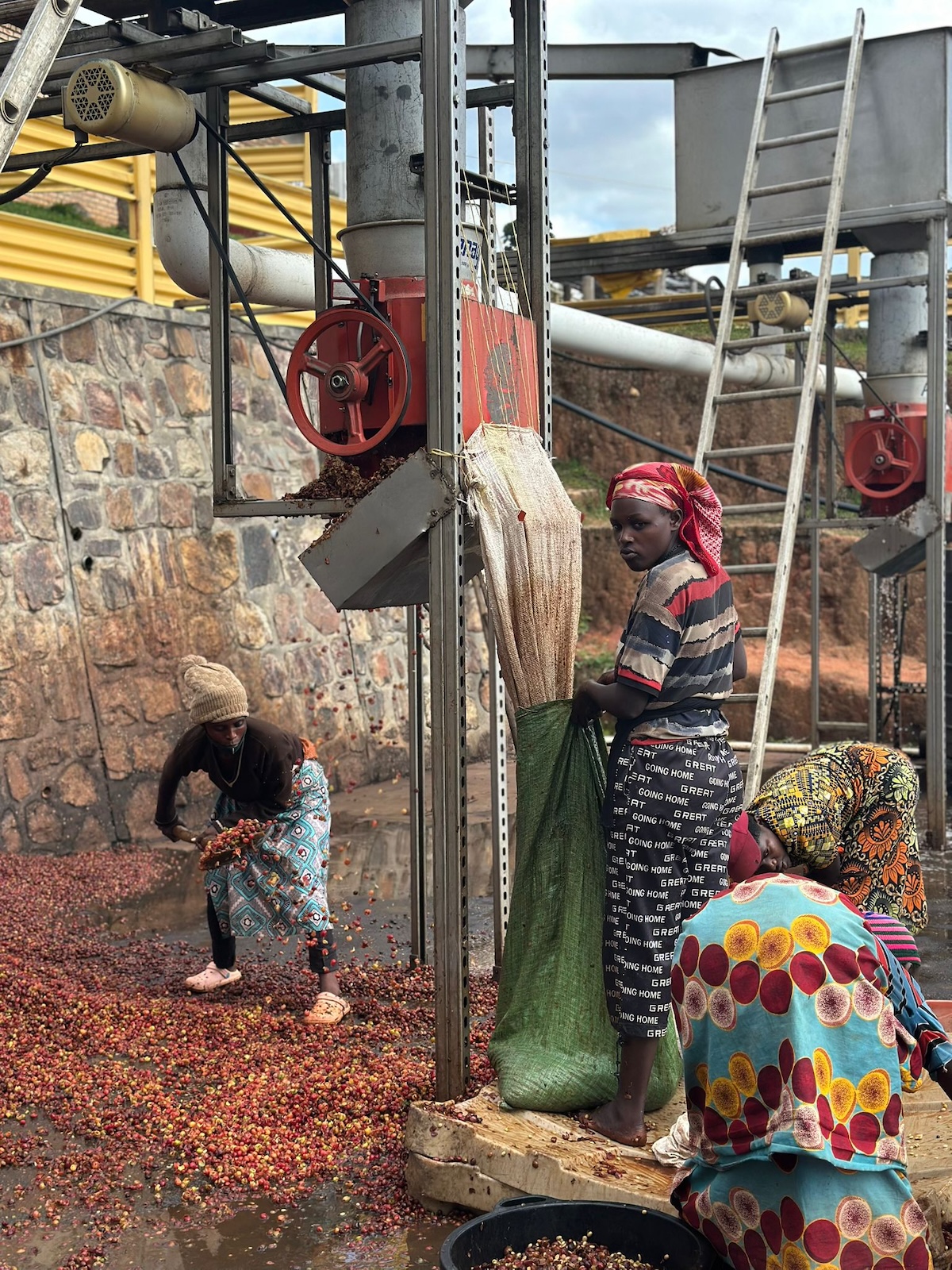
This one stands out because of its processing style. Unlike typical washing stations, this site doesn’t have washing channels. Instead, coffees are pulped and washed in large tanks, which are drained and refilled multiple times while being manually washed before drying.
It's still considered fully washed, but the process leaves a bit more mucilage on the parchment. The result is a much rounder, richer cup profile with darker fruit, cocoa powder, and brown sugar sweetness, quite different from the Western Province profiles.
Interested in our Rwandan offerings this year? Keep your eyes on our offerlist and don’t forget to reach out for samples!