Indonesia has one of the world's richest coffee histories, yet for decades its reputation has been largely defined by traditional wet-hulled coffees, heavy-bodied, earthy profiles that often reflected the challenges of producing coffee in a humid tropical climate. While these coffees remain an important part of Indonesia's identity, a new generation of producers is proving there is much more to discover.
At Nordic Approach, we've had the privilege of working alongside Frinsa Estate in West Java since 2016, celebrating 10 years as partners. Together, we've developed consistent, traceable lots, refined processing techniques, and explored new fermentation methods that continue to challenge expectations of what Indonesian coffee can be. Our coffees from Frinsa are the funkiest, most unique processing methods you will find on our offerlist.
At the heart of that work is a family whose diverse expertise, from agronomy and chemistry to engineering and business development, has transformed Frinsa into one of Indonesia's most innovative specialty coffee producers.
We had the pleasure of sitting down with the team at Frinsa Estate to learn more about their journey, operations, and unique approach to coffee farming, processing, and business. Here is a full overview!
A Family Business Built Around Specialty Coffee
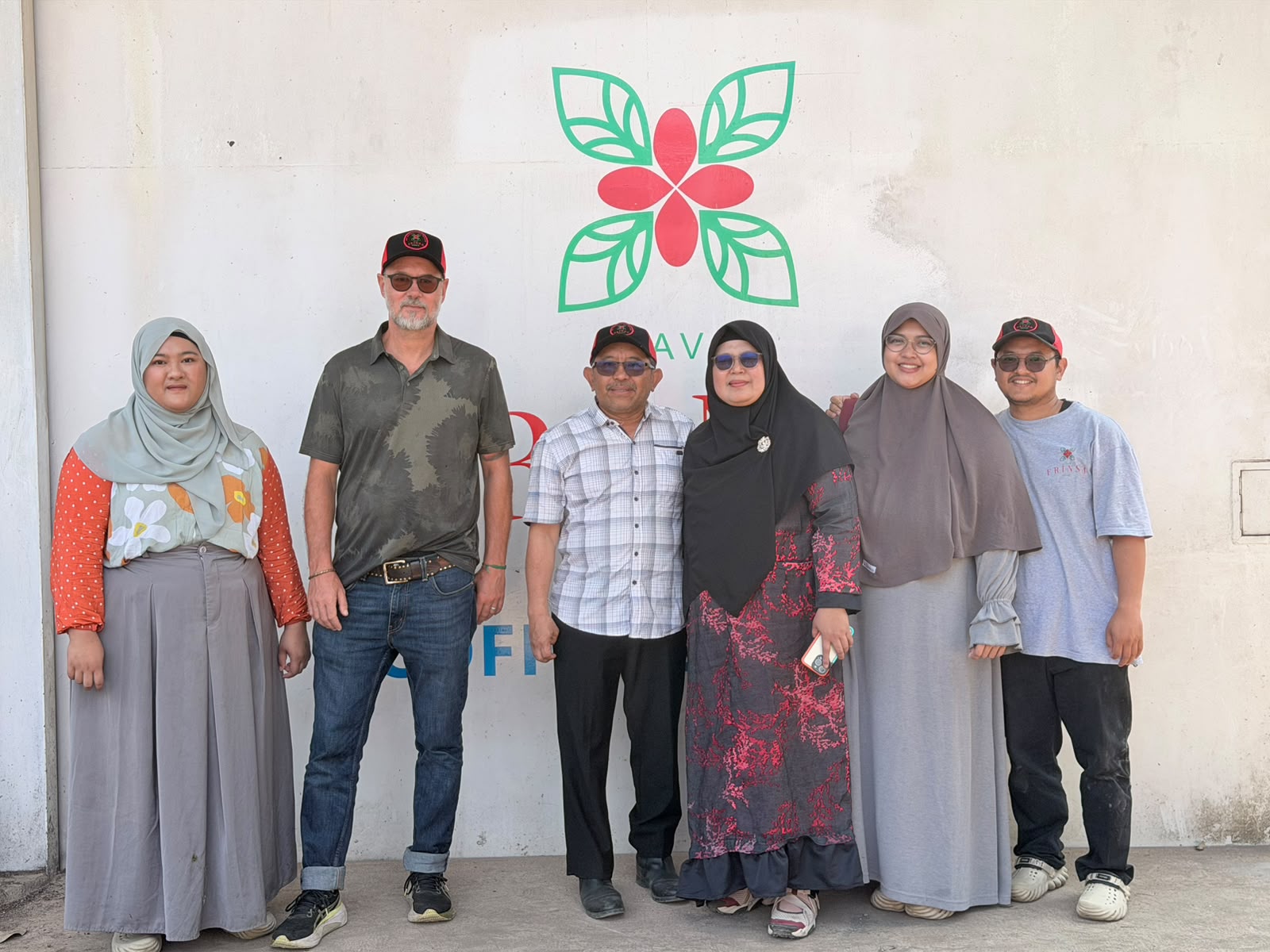
Frinsa Estate is very much a family operation. Founder Wildan Mustofa, an agronomist by training, leads the agricultural side of the farm. His wife, Atieq, a chemist, plays a key role across the operation, while their son Fikri, with an engineering background, oversees processing, warehousing, exports and systems development. Wildan’s daughter-in-law Widya manages finance, while his daughters Rifda and Yasmin are involved in marketing and finance, with Yasmin also supporting marketing.
Rather than separating farming from business, each family member contributes a different perspective that strengthens the operation as a whole. This combination of disciplines has helped Frinsa develop an integrated business where every stage of production is managed carefully.
"I think more about agriculture, technology and systems," Wildan explains. "I'm a farmer, but I also think like a businessman, with machines, with technology."
Frinsa Estate currently covers 100 hectares of land, producing its own cherries that are processed separately and exported as single-farmer lots. In addition, the estate works closely with surrounding farmers, purchasing their cherries to create the Frinsa Collective blends.
The Early Days of Frinsa Estate
When Wildan began planting coffee in 2011, he was focused on a soil and water conservation programme designed to improve the landscape around his land. But it soon became clear that conservation alone wasn't enough, it must also be sustainable. And the first step in sustainability is the sustainability of the people involved, especially the local farmers he had started working with.
“We needed to create a business model that could make coffee farming profitable for both us and the surrounding farmers. We started exploring exports, conducting many trials and experiments with different processing methods, and working with single varieties. We travelled across Indonesia to collect the best coffee varieties from different regions, and we also brought in varieties from other countries”, he adds.
The estate now spans around 100 hectares, while neighbouring farmers cultivate many of the same varieties using seedlings supplied by Frinsa’s own nursery. Over the years, the team has collected coffee genetics from across Indonesia and beyond, carefully selecting cultivars that perform best in their local environment. Today, the estate is home to a diverse collection of rare and distinctive coffee varieties you can read more about here.
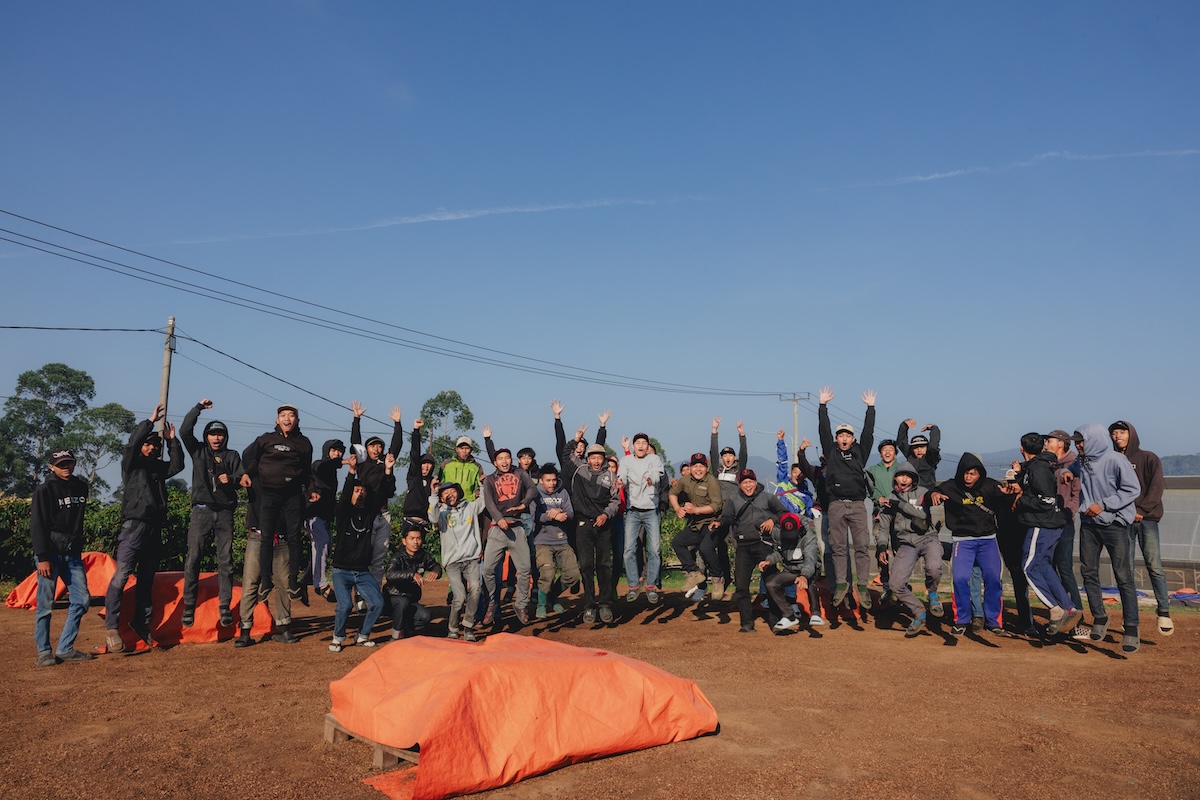
Many of the farmers also work seasonally on the estate, creating a close relationship that allows quality standards and farming practices to be shared throughout the community.
For Nordic Approach, this close collaboration is equally important. Through a long-term partnership and pre-financing, we work with Frinsa to secure additional cherry for production while supporting the development of new coffees and experimental lots year after year.
Building Quality from Nursery to Export
One of Frinsa's greatest strengths is its control over every stage of production.
The team manages everything from seed selection and variety trials through cultivation, harvesting, processing, dry milling, warehousing, and export. This level of integration is not the norm, but it allows every lot to be monitored from the moment a seed is planted until green coffee is loaded for shipment.
As farmers grow many of the same cultivars supplied through Frinsa’s nursery, they receive the same planting material and guidance, so quality standards can remain consistent across both estate-grown and purchased cherry.
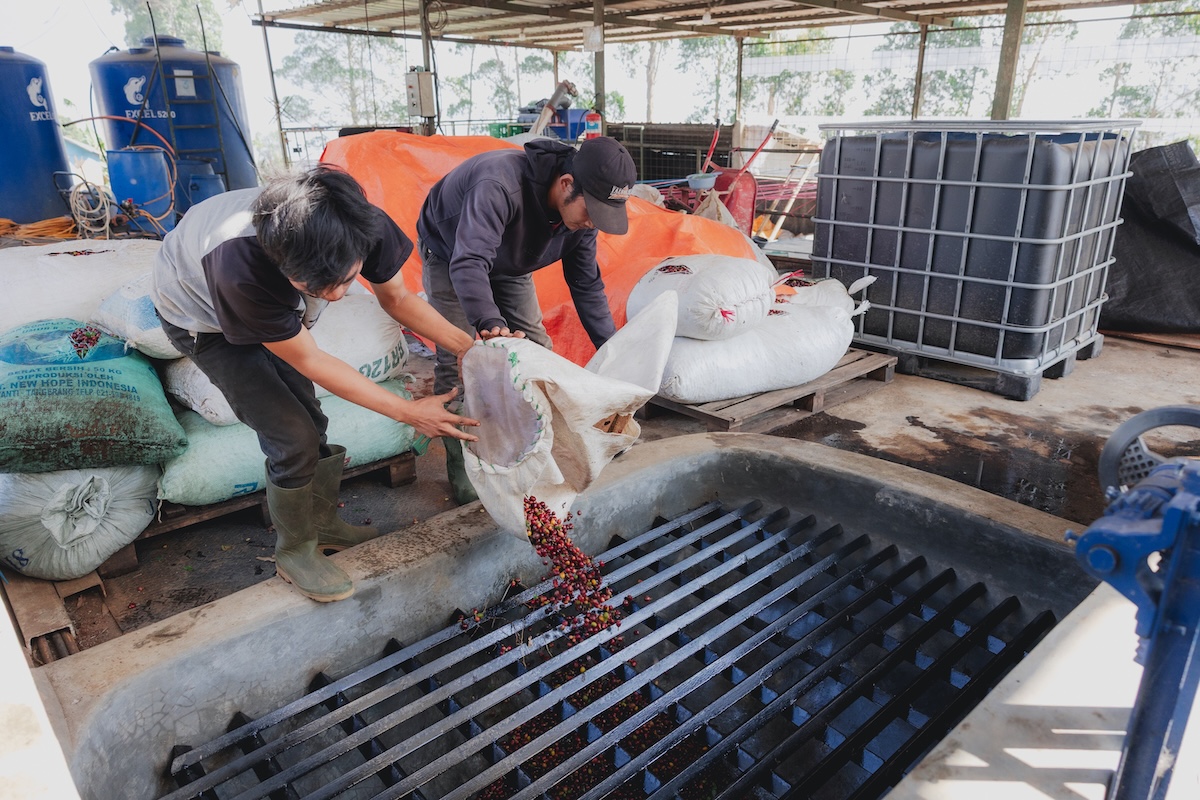
Harvesting also follows strict protocols. Pickers focus exclusively on ripe red cherries, while different varieties are harvested separately using colour-coded bags to avoid accidental mixing. Every lot remains isolated throughout processing, preserving both traceability and varietal identity.
Every delivery undergoes inspection. Fully ripe cherries receive quality premiums, while under-ripe deliveries are either discounted or rejected altogether. Once accepted, each lot is labelled, tracked throughout processing and drying, and remains fully traceable back to the individual producer.
"We documented everything," Wildan says. "From nursery, growing, processing, warehousing and export, we try to do the best practices in every step."
What Goes into Developing New Processing Techniques?
Developing innovative processing techniques is a core part of Frinsa’s approach, with the estate becoming well known for its unique specialty preparations. When there is demand for a new style of coffee, we work closely together to develop consistent products while sharing and managing the risks involved. Each new process is treated as a research project, with careful experimentation, evaluation, and refinement.
Whether experimenting with yeast cultures, anaerobic fermentation or tropical microorganisms, every trial is documented over multiple harvests before reaching our warehouse.
Typically, a new process follows a three-year development cycle. The first harvest explores the concept and identifies potential. The second harvest refines the method, increasing production while comparing different variables. Only after demonstrating consistency over several seasons will a coffee be brought to the market.
"We need at least three years for one experimental process," Wildan explains. "We only sell the one which has a good result and good consistency."
The estate also works closely with universities across Indonesia, such as IPB University, Padjadjaran University, and Jakarta Institute of the Arts. Students complete internships and research projects on the farm, helping collect data while professors contribute scientific oversight. Each year's research becomes the foundation for future experiments, allowing Frinsa to continuously build on previous knowledge.
Engineering Better Coffee Fermentation
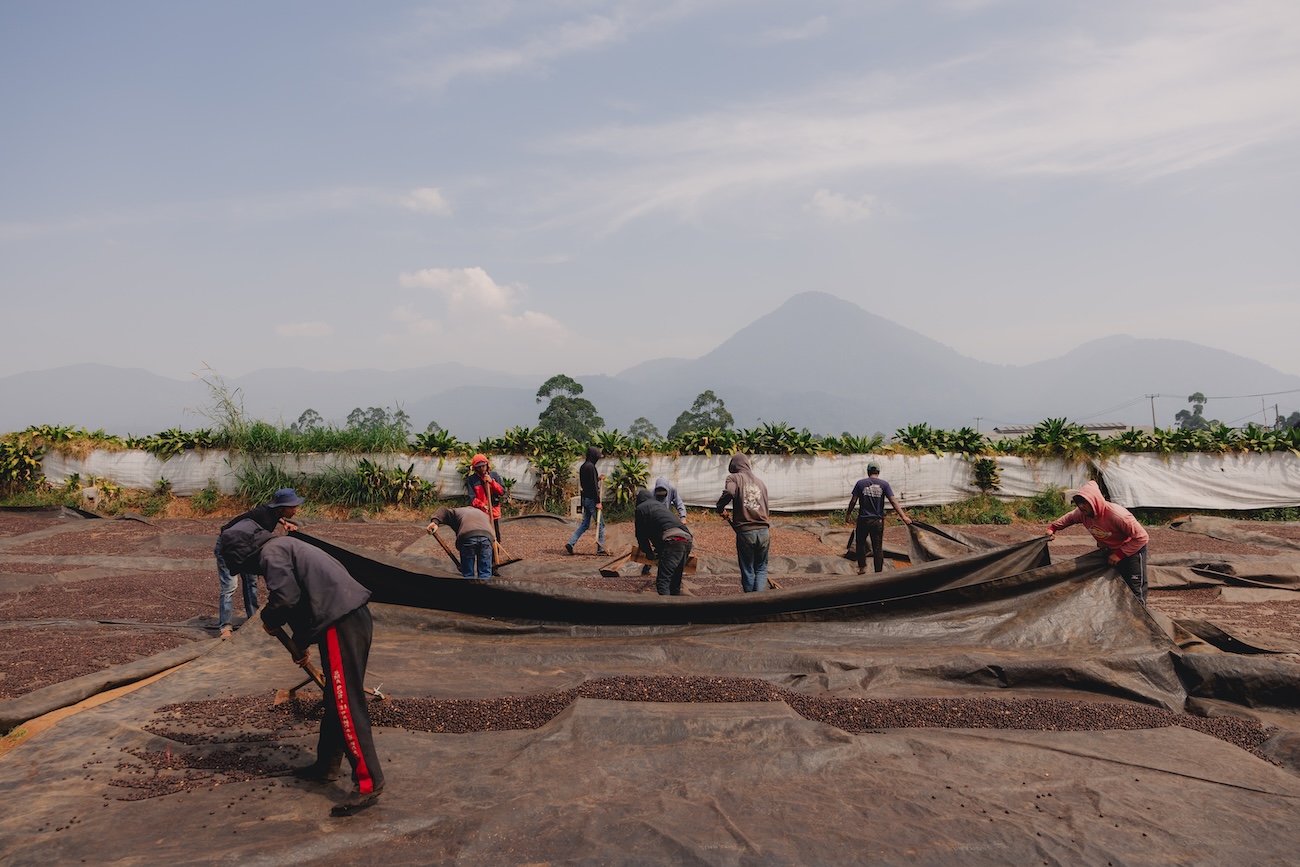
Processing coffee in West Java comes with unique challenges. The estate sits at high elevation, where cool daytime temperatures and cold nights slow both drying and fermentation. While many producers struggle to control these conditions, Frinsa has invested heavily in infrastructure to create greater consistency.
Their parabolic drying houses allow coffee to dry evenly during the critical early stages, protecting quality during periods of high humidity.
The greenhouse also provides the warm, stable conditions needed for controlled fermentation. Situated in the cool highlands of West Java, Frinsa experiences daytime temperatures of around 20–25°C, with nights often dropping to 10–15°C. These conditions are ideal for growing coffee but less suitable for the tropical microorganisms the team uses during fermentation, including naturally occurring yeasts and bacteria traditionally used in Indonesian foods such as tempeh and tapai.
"The greenhouse makes the temperature higher to do the fermentation," Wildan explains. By creating a warmer, more consistent environment, the greenhouse allows these microbes to perform reliably, resulting in cleaner, more controlled fermentations regardless of the weather.
Want to take a look at what the Nordic Approach product lineup looks like from Indonesia? Read more here.
To Conclude...
Frinsa combines scientific research, careful processing, and strict quality control to create coffees that are clean, expressive, and consistent. For Nordic Approach, this partnership represents what specialty coffee is all about: collaboration, trust, curiosity, and long-term consistency.
When asked which coffees they enjoy drinking most, the Frinsa family’s answer was refreshingly simple: fully washed coffees remain their everyday favourite for the morning, and special preps and naturals are enjoyed during the day.