More and more people are looking for coffee they can enjoy any time of day, without the caffeine. Whether for health, balance, or simply taste, the demand for decaf coffee is rising fast, and we are looking for options that don’t compromise on quality.
That’s where our new Colombian and Ethiopian Decaf lots come in. We started sourcing and refining decaf lots that not only meet our quality requirements but also reflect the origin’s character, as with all our regular lots. Our Colombian naturals and washed coffees come from the beautiful Huila region, and some are also available as regular caffeine coffee on our offer list. Our Colombian coffees are naturally decaffeinated at Descafecol, an experienced partner at origin using the E.A method. The result? Sweet, fruit-forward cups that're just as enjoyable as their caffeinated counterparts.
We’re also taking things a step further this season by decaffeinating one of our popular natural Ethiopians in partnership with Coffein Compagnie in Germany, bringing us closer to the decaf process and allowing us to learn more from it.
About the Natural Sugarcane Decaffeination Method
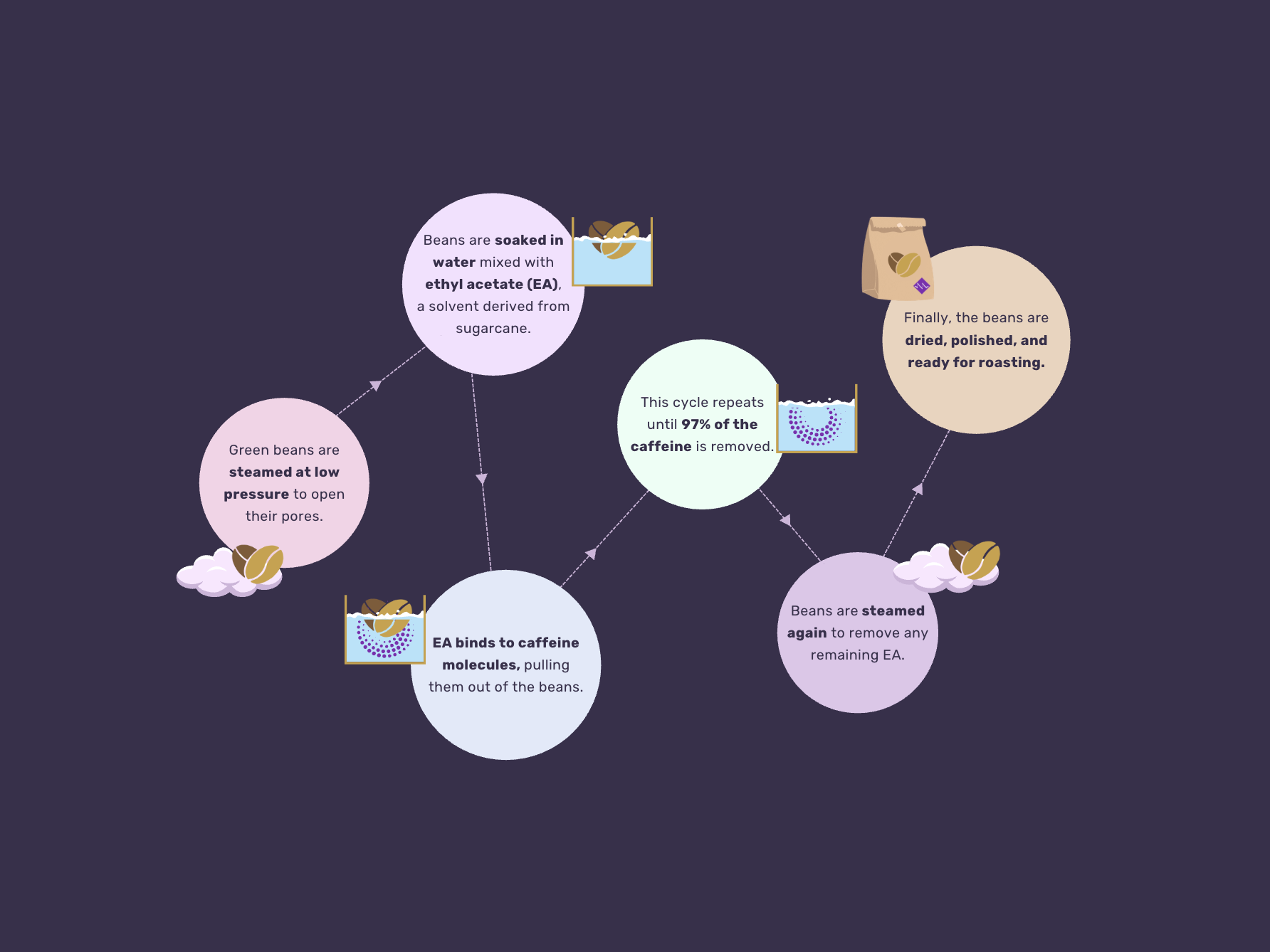
The Sugarcane or E.A. (Ethyl Acetate) process is also called “The Natural Decaffeination Method”. At Nordic Approach, we prefer this process because it has the least negative effect on the coffee beans. But how does it work?
It begins by fermenting molasses from locally grown sugarcane to create ethanol, which is then combined with acetic acid to produce ethyl acetate, a naturally occurring compound also found in fruits, wine, and beer.
The coffee is first steamed to open its pores, then immersed in a water solution containing E.A., which selectively binds to and removes caffeine. Once the caffeine is filtered out, the beans are steamed again to eliminate any trace of the solvent before being dried and prepared for export.
Because this method uses moderate temperature and pressure, it helps preserve the coffee’s cell structure and flavour integrity. The trade-off is that decaf processed this way can age a little faster than non-decaf coffees, sometimes showing a slightly “sweaty” or darker surface once roasted, but that’s all part of its natural character.

Decaffeinated Coffees on the Offer List
This season, we’re excited to share a standout selection of decaffeinated coffees with the first Colombias and Ethiopias that arrived in recent days, and the next lots, our Siete Soles and Santa Maria Decafs, are scheduled to arrive in January. Get in touch with your sales representative if you’d like to reserve your lots.
Santa Maria Decaf (CO-25-0483)
Enki’s philosophy is that an exceptionally good washed lot can make a fantastic decaf if processed correctly. This is why he selected this Santa Maria collective lot. The Santa Maria region, where this coffee was harvested, is surrounded by mountains and the Nevado del Huila Volcano. The exceptional combination of microclimates and long-standing fermentation traditions gives the coffee its characteristic sweetness and delicate floral and fruity notes.
Siete Soles Decaf (CO-25-0484)
Enki carefully selected this decaf coffee and began searching for very specific profiles with potential to be outstanding. Siete Soles was picked for its great fruity and funky character. After employing the sugarcane method for decaf, a lingering sweetness from the process balances out the funkiness, making for a unique and delicious choice for decaf lovers.
Amenaza Menor Decaf - Pink Bourbon (CO-25-0290)
'Amenaza Menor' is a nod to one of our favourite bands around the office. The farmers contributed Pink Bourbon parchment from nine different farms located in the municipalities of Santa Maria, Icononzo, Rovira, Rioblanco, and Ibagué, at altitudes ranging from 1,700 to 2,000 masl. The coffee is washed following the traditional Colombian method and dried on the farms in marquesinas for about 10–25 days. The farmers deliver the parchment to Azahar, where it is decaffeinated.
Amenaza Menor Decaf (CO-25-0289)
Another washed decaf blend developed with our partners at Azahar sourcing coffee from a group of producers in Huila, Narino, and Tolima grown at altitudes ranging from 1650 to 2000 masl. The coffee undergoes a 60-hour dry fermentation process, followed by drying on raised beds and ends with mechanical drying, with a total drying time of 15 to 30 days, ensuring optimal flavour development.
Bildimoo Bensa Bombe #6 Decaf (ET-25-0413)
This coffee was selected by our green buyer, Adham, for decaffeination due to its profile and great volume. The sugarcane method adds a nice sweetness that balances the funky character of this beautiful natural lot produced by the private exporter Tariku Kare.
The ‘Bildimoo’ flavour profile is a concept we use in our flavour wheel to describe the character of coffee. The word refers to clay soil and a shade of red in the Oromiffa language. For us, this concept represents coffees with lactic qualities and notes of lychee, cinnamon, pineapple, cola, and ginger.
Now is the perfect time to bring our decaf onto your menu. With a new year comes new choices and offering decaffeinated coffee that doesn’t compromise on taste lets you meet a growing demand while keeping your menu exciting and varied. Check out our Decafs on the Offer List!