In our last Tanzania update, we talked about the “comeback” of Tanzanian specialty coffee: better politics, improved infrastructure, and renewed potential. But for a green buyer or roaster, the real question isn’t just “is it better?” It’s “Is this supply sustainable, and will it hold up over time?”
We’re not buying coffee just because it’s available. We’re building a controlled supply chain that’s designed to fix the long-standing issues of consistency and stability that have made Tanzania a challenging origin in the past. That’s possible because of our close partnership with City Coffee, Ibero Tanzania's sister company on the ground managed by Ibero Tanzania.
Partnering with City Coffee on the ground
To achieve the level of control we expect, we work hand-in-hand with City Coffee. As part of the same network, they’re fully embedded in the production chain rather than acting as a SPOT buyer. This is what makes the difference:
City Coffee pre-finances the harvest, advancing payments against cherry delivery. This helps farmers avoid predatory middlemen, improves cash flow, and ensures the best cherries are delivered directly to the washing stations. They also place their own quality supervisors at the Central Processing Units (CPUs) during harvest, who oversee cherry intake, pulping, and fermentation protocols in real time.
Nordic Approach is in close dialogue with the people on the ground throughout the season. Our selected Amcos will be based on the quality and flavor profile, their management, approach to sustainability, as well as the intelligence we get from Citi Coffee. We are selective and strict on who we choose to work with. But at the same time, we see Tanzania as work in progress when it comes to quality. The potential is amazing, and our philosophy is to go in, find the hidden gems that will be great over time, actively do product development and interact with the Amcos that really want to improve and invest in quality.

Logistics That Protect Quality After Harvest
Post-harvest handling has historically been one of Tanzania’s biggest challenges. Heat and humidity can quickly lead to fading and instability if logistics aren’t tight. City Coffee has reworked this part of the chain entirely:
Parchment buying
Coffee is purchased in parchment form, which enables farmers to receive payment within seven days of delivery, significantly faster than traditional systems.
Centralized milling by cup profile
Instead of milling immediately, City Coffee waits until around 80% of a cooperative’s parchment has arrived at their dry mill in Mbeya. All lots are cupped, separated by profile, and milled accordingly. This approach avoids mixing coffees by delivery date, resulting in much more consistent flavor profiles per lot.
High-altitude storage
After milling, fully washed coffees are packed in Ecotact or Grainpro bags and stored at City Coffee’s high-altitude warehouse in Mbeya. The coffee is only moved to Dar es Salaam a maximum of two weeks before shipment, minimizing exposure to coastal humidity.
Infrastructure: Solving the "Phenolic" Mystery
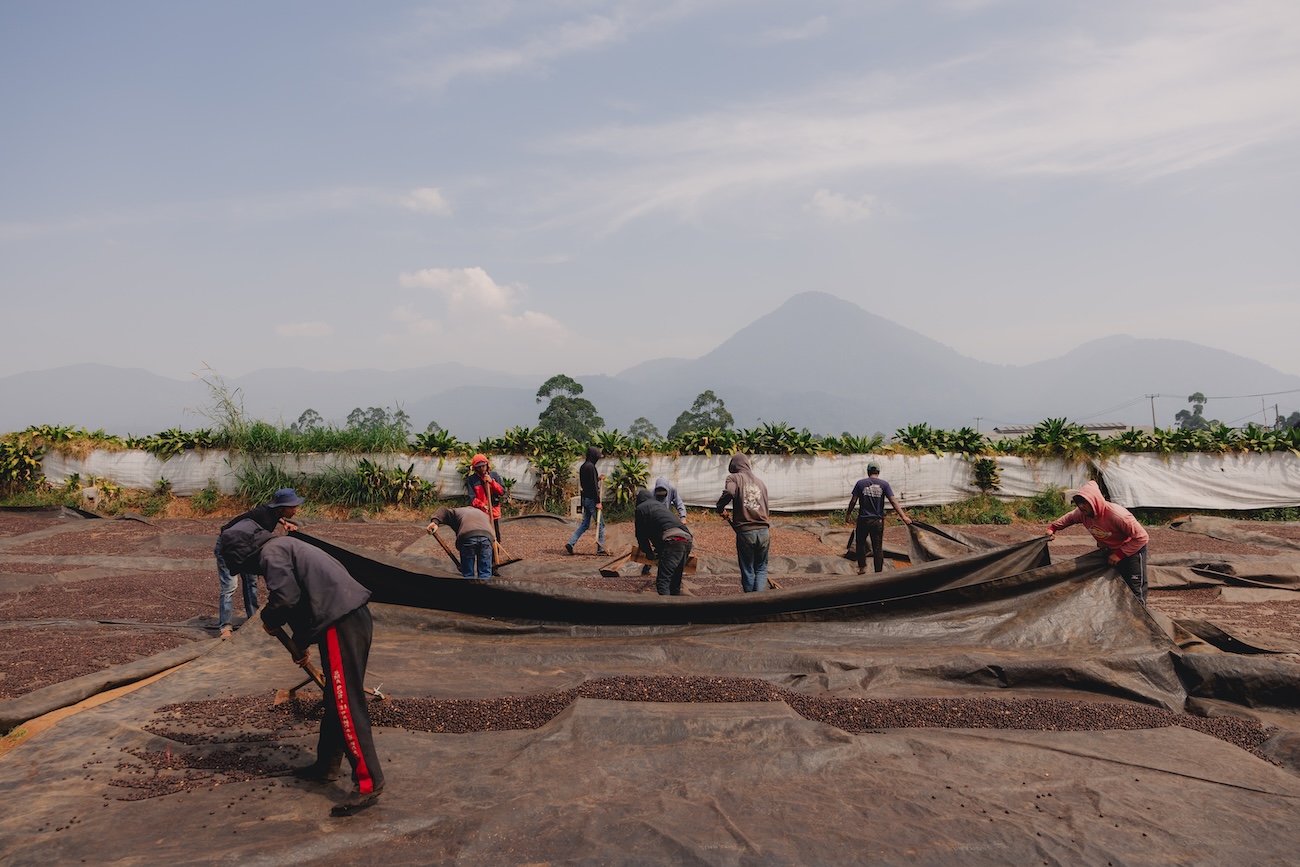
Some roasters may remember older Tanzanian coffees occasionally showing phenolic cups and general cup inconsistency. We know this often comes from outdated pulping and grading systems, parchment re-wetting during drying, caused by cold mountain mist in the evenings.
To address this, City Coffee is investing directly at the washing station level:
- Installation of eco-pulpers for better processing control and lower water usage
- Improved protocols for drying technique and management
- Experimenting with solar drying tents (parabolic dryers) that cover the drying tables
These tents protect parchment from nighttime moisture and keep drying temperatures consistent. The result is cleaner, more stable coffees with none of the defects that gave Tanzanian coffee a mixed reputation in the past.
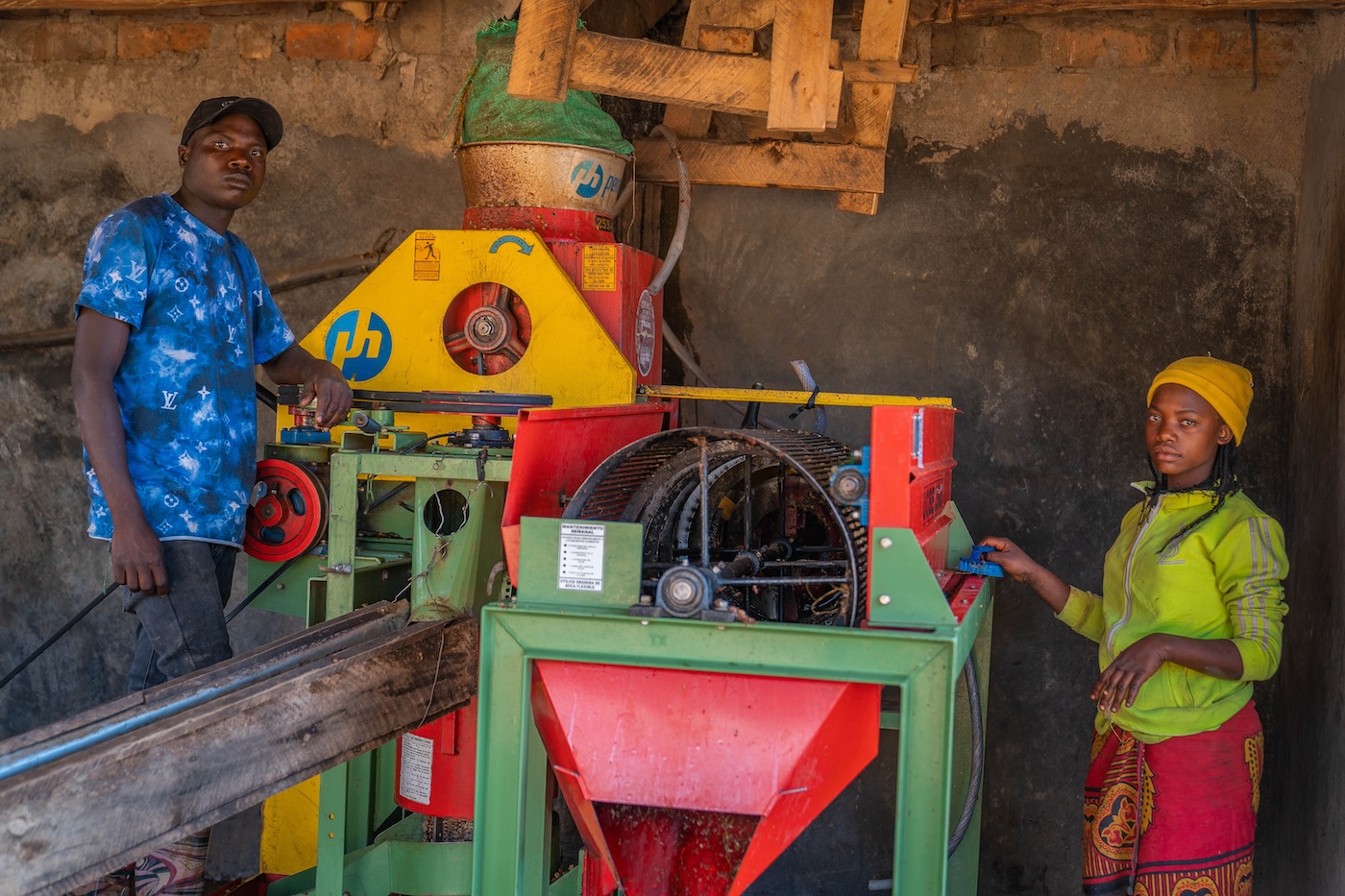
Meet the Cooperatives (AMCOS)
Our sourcing is focused on the Southern Highlands, primarily Mbeya and Songwe, working with five core AMCOS partners committed to quality and long-term improvement.
Iloma (Mbeya Rural)
~400 members | 1,830 masl
A highly efficient cooperative led by a strong chairman with business experience. They run a large central washing station handling 60–70 tons of cherry per day, using water from the Vidawa River for eco-pulping and density grading.
Nsoga (Songwe)
~300 members | 1,300–1,700 masl
A younger cooperative operating five small CPUs. The leadership is proactive and reinvests profits into infrastructure, improving traceability and farmer income year over year.
Shinzingo (Mbeya)
~500 members | 1,727 masl
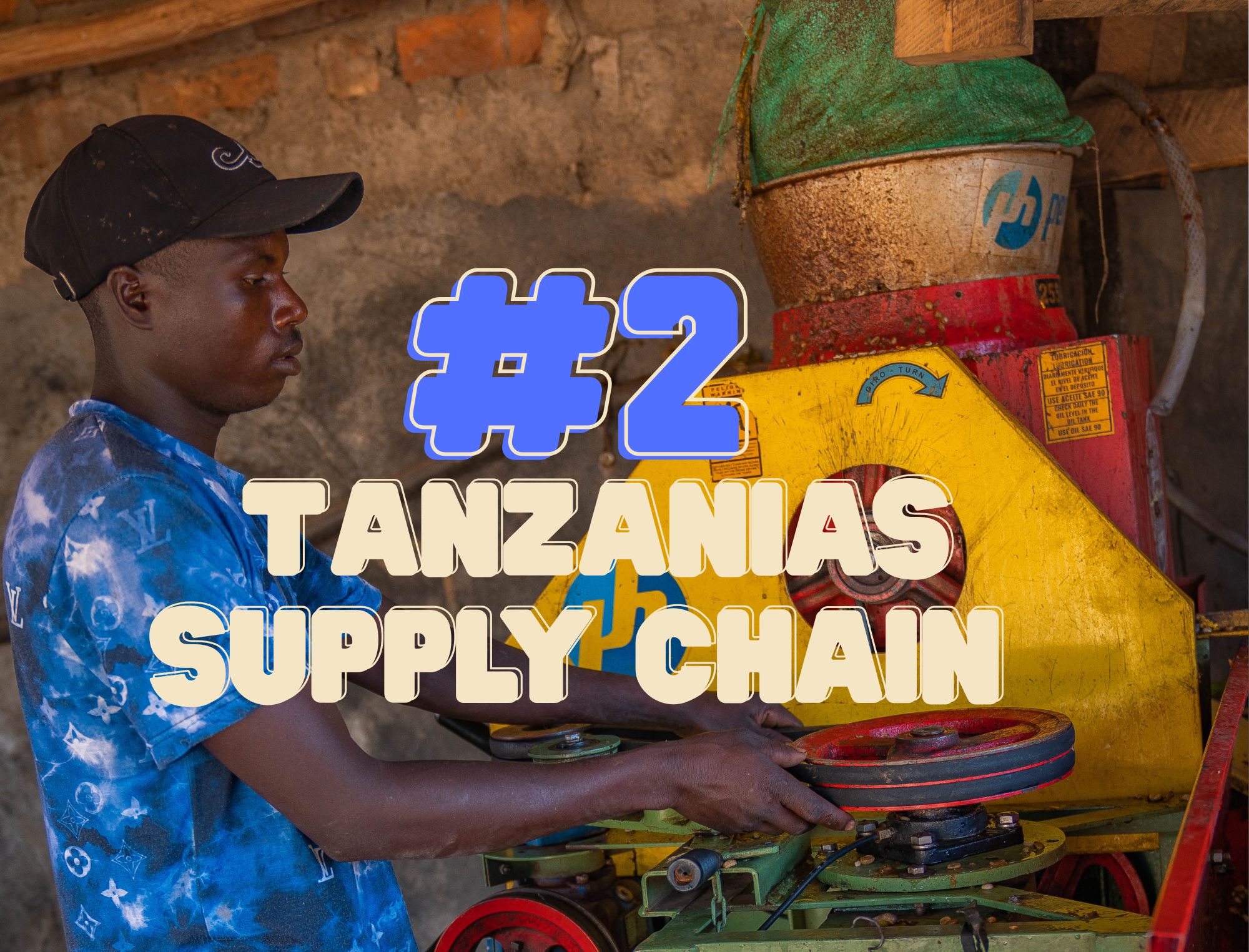
Founded in 2012, Shinzingo has grown into a fully centralized operation using a Penagos eco-pulper. While currently focused on washed coffees, they’re investing in infrastructure to produce high-quality naturals in the near future.
Shilanga (Mbeya)
~200 members | 1,646 masl
A stable, experienced cooperative producing around 2,500 bags annually. Strong water management from the Runda River and a consistent focus on sustainability show clearly in the cup.
Umalila (Mbeya)
~250 members | 1,759 masl
An exciting cooperative using careful eco-pulping and longer fermentation times. Early trials with natural processing this year are showing real promise and point toward future flavor expansion.
The Cup Profile
Southern Tanzania is roughly 70% compact hybrid varieties and 30% traditional Bourbon/Kent types (including N39 and KP432). With the level of processing control described above, the profiles are clear and expressive:
Washed coffees
Dark cherry, rosehip, hibiscus, and stone fruit. Structured and vibrant, Kenya-like in shape, but with a floral softness closer to Burundi.
Aromatic and boozy with layered tropical fruit. Still a smaller part of production, but an area we’re actively developing.
Some highlights from our Offer List
Coffees have arrived in our Belgium warehouse and we have arrival samples on hand for you to cup these exceptional coffees, just get in touch with your sales rep.
AA Iloma: TZ-25-0023 & AB Iloma: TZ-25-0024
All our Iloma coffees are very open and have expressive profiles with good structure and lots of fruit and floral notes.
Iloma is one of the earliest adopters of fully centralised washed processing in the Songwe region. The cooperative has become one of the most successful in the area, currently supporting around 400 members who deliver approximately 2,660 bags annually.
Morten's tips for you: Planning for 2026
“If you’re planning Tanzania for 2026, think in terms of repeatability, not one-off hype. These coffees arrive from January to February, packed in 60 kg Grainpro or Ecotact, and they’re separated by cup profile before milling. That’s what gives you consistency, whether you’re building a clean single origin or dialing in a blend component,” he also mentions, “My advice? Cup early, lock in what works for you, and plan volume with confidence. This is Tanzania you can rely on.”