


What is a Bill of Lading in Coffee Shipping?
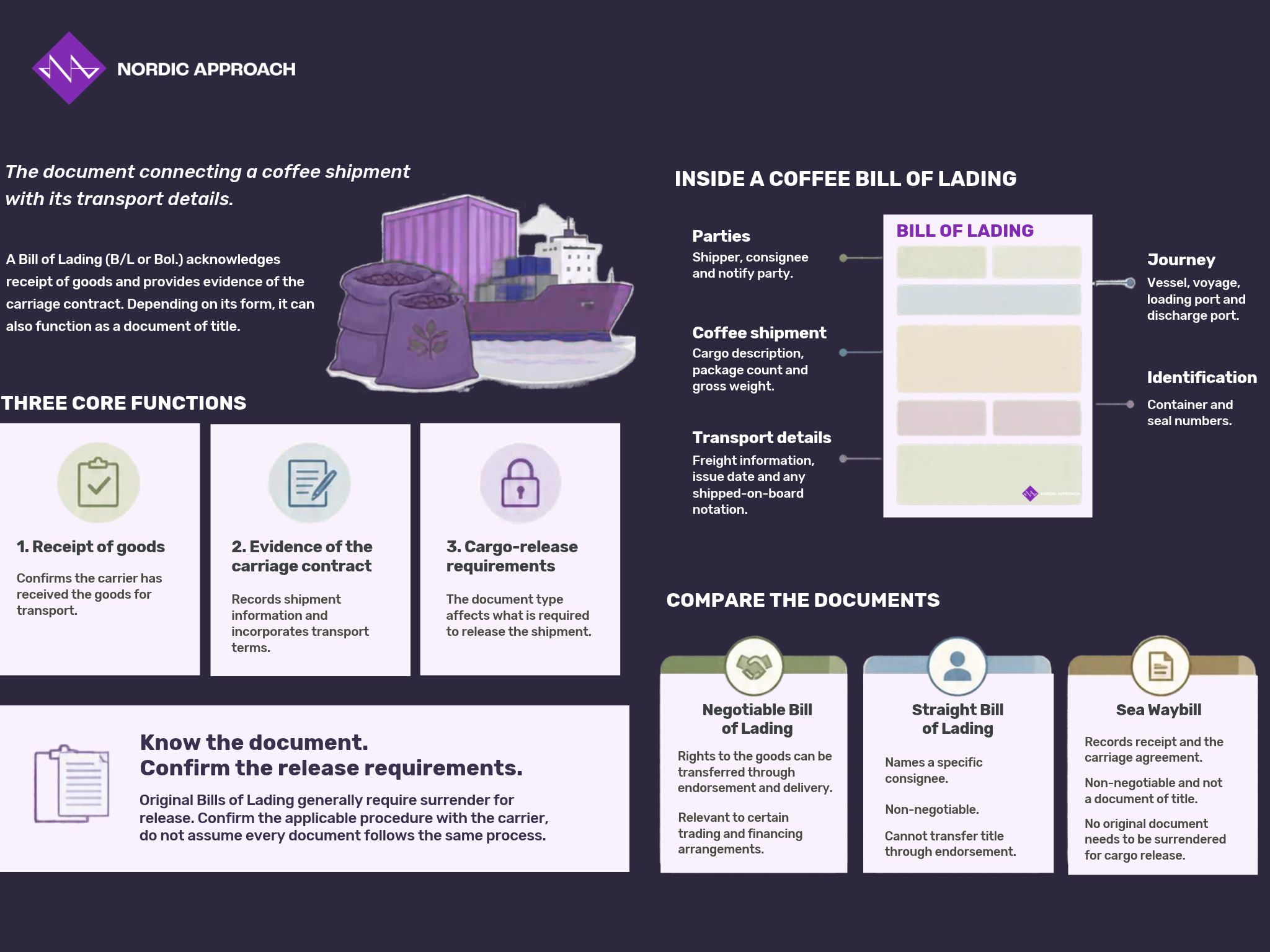
A Bill of Lading (B/L or BoL) is a transport document issued by a carrier to a shipper. It acknowledges receipt of goods for carriage and provides evidence of the contract governing their transport. Depending on its form, it can also function as a document of title, allowing rights to the goods to be transferred.
In green coffee shipping, the Bill of Lading identifies the shipment through details such as the shipper, consignee, ports, cargo description, package count, weight and container number. It connects the physical coffee shipment with its transport documentation.
Why a Bill of Lading Matters
Receipt of goods
The Bill of Lading acknowledges that the carrier has received the goods for transport. This is one of its core functions, alongside providing evidence of the carriage agreement.
Evidence of the transport agreement
The document records the parties and shipment details and incorporates the terms under which the carrier transports the goods. These terms address matters such as freight charges, responsibilities and carrier liability.
Control over cargo release
The type of transport document affects how goods are released at destination. An original Bill of Lading generally requires surrender of the original document, whereas a Sea Waybill does not require an original to be presented for release. Understanding this distinction is important when arranging delivery.
What Information Does a Coffee Bill of Lading Include?
A green coffee Bill of Lading typically records:
- Shipper: the party sending the goods.
- Consignee: the party named to receive them.
- Notify party: the contact listed for shipment notifications.
- Vessel and voyage: the ship and voyage reference.
- Ports: the port of loading and port of discharge.
- Cargo details: the description of the coffee, package count and gross weight.
- Container and seal numbers: references identifying the container and its seal.
- Freight details: information such as whether freight is prepaid.
- Issue and shipment details: including the issue date and, where applicable, a “shipped on board” notation.
Types of Shipping Documents
Negotiable Bill of Lading
A negotiable Bill of Lading allows rights to the goods to be transferred through endorsement and delivery of the document. This can be relevant when goods change hands during transit or when a shipment is financed.
Straight Bill of Lading
A straight Bill of Lading is non-negotiable and names a specific consignee. Unlike a negotiable Bill of Lading, it cannot be used to transfer title through endorsement.
Sea Waybill
A Sea Waybill also acknowledges receipt of goods and provides evidence of the carriage contract, but it is not a document of title. It is non-negotiable and does not require surrender of an original document for cargo release.
Where Nordic Approach Fits In
Bills of Lading form part of the documentation used for Nordic Approach’s international green coffee shipments. They record the coffee being transported, the parties involved and the shipment’s transport references.
For roasters, understanding these documents helps clarify the difference between identifying a shipment and meeting the requirements for its release. The document type matters, particularly when distinguishing an original Bill of Lading from a Sea Waybill.
FAQ about Bills of Lading
Q1: Is it “Bill of Lading” or “Bill of Landing”?
The correct shipping term is Bill of Lading, commonly abbreviated to B/L or BoL.
Q2: Who issues a Bill of Lading?
The carrier issues the Bill of Lading to the shipper. It acknowledges receipt of the goods and provides evidence of the transport contract.
Q3: Is every Bill of Lading negotiable?
No. Bills of Lading can be negotiable or non-negotiable. A negotiable document allows rights to the goods to be transferred through endorsement and delivery; a straight Bill of Lading does not.
Q4: Is a Sea Waybill the same as a Bill of Lading?
No. Both document receipt of goods and the carriage agreement, but a Sea Waybill is not a document of title and does not require surrender of an original for cargo release.